On this page
- Is Pepperoni Pork or Beef?
- Where the Name and the Pizza Topping Come From
- Is Pepperoni Halal?
- Pepperoni With a Halal Claim
- Beef and Turkey Pepperoni With No Halal Claim
- Plant-Based Pepperoni
- The Four Pizza Chains
- Every Pepperoni We Checked
- The Religious Basis
- How We Graded
- Frequently Asked Questions
- Final Verdict – Pepperoni
- Credits
- Sources
Short answer: Pepperoni is pork, or pork and beef, unless its name says otherwise, and pepperoni that contains pork is not halal. The U.S. Department of Agriculture defines pepperoni as "A dry sausage prepared from pork or pork and beef." We read the ingredient lists of 41 pepperoni products and the pepperoni pages of 4 pizza chains. Thirty-three of the 45 list pork, including Domino's, Pizza Hut, Papa Johns and Little Caesars, and they fail. Six beef or turkey pepperonis say nothing about halal slaughter, so they fail too. Three products claim to be halal and nothing known makes them haram, so they are halal to consume as far as we can tell, although we have seen no certificate for any of them. Of three plant-based pepperonis, one is halal to consume as far as we can tell, one fails because of its brandy vinegar, and one is doubtful.
Grade: FAIL for 40 of the 45: all 33 that list pork, the 6 beef or turkey products with no halal claim, and Tofurky Pepp'roni (brandy vinegar). HALAL TO CONSUME, as far as we can tell, for 4: Hormel Foodservice HALAL Pepperoni, Midamar Halal Sliced Beef Pepperoni, Nema Beef Pepperoni and Field Roast Plant-Based Pepperoni. DOUBTFUL for 1: Sweet Earth Italian Style Pepperoni (undisclosed natural flavors).
Two questions come up whenever pepperoni is on the menu: is it pork or beef, and is it halal? The first has a legal answer in the United States, and the second depends on it. For this report, Halal Watch World read the pepperoni entries in the U.S. Department of Agriculture's labeling policy book and the federal labeling rules for meat, then read the labeling pages of 41 pepperoni products from 21 brands and store labels, including three that claim to be halal and three that are plant-based, and the pepperoni information published by Domino's, Pizza Hut, Papa Johns and Little Caesars. All of it was read on November 27, 2026, and we compared it with Halal Watch World's standards.
Is Pepperoni Pork or Beef?
In the United States the name "pepperoni" has a legal meaning. The Food Safety and Inspection Service (FSIS) of the U.S. Department of Agriculture, which regulates meat labeling, defines it in its Food Standards and Labeling Policy Book. The entry reads, in part: "A dry sausage prepared from pork or pork and beef. Combinations containing more than 55 percent beef are called beef and pork pepperoni. Pepperoni made with beef must be called beef pepperoni."
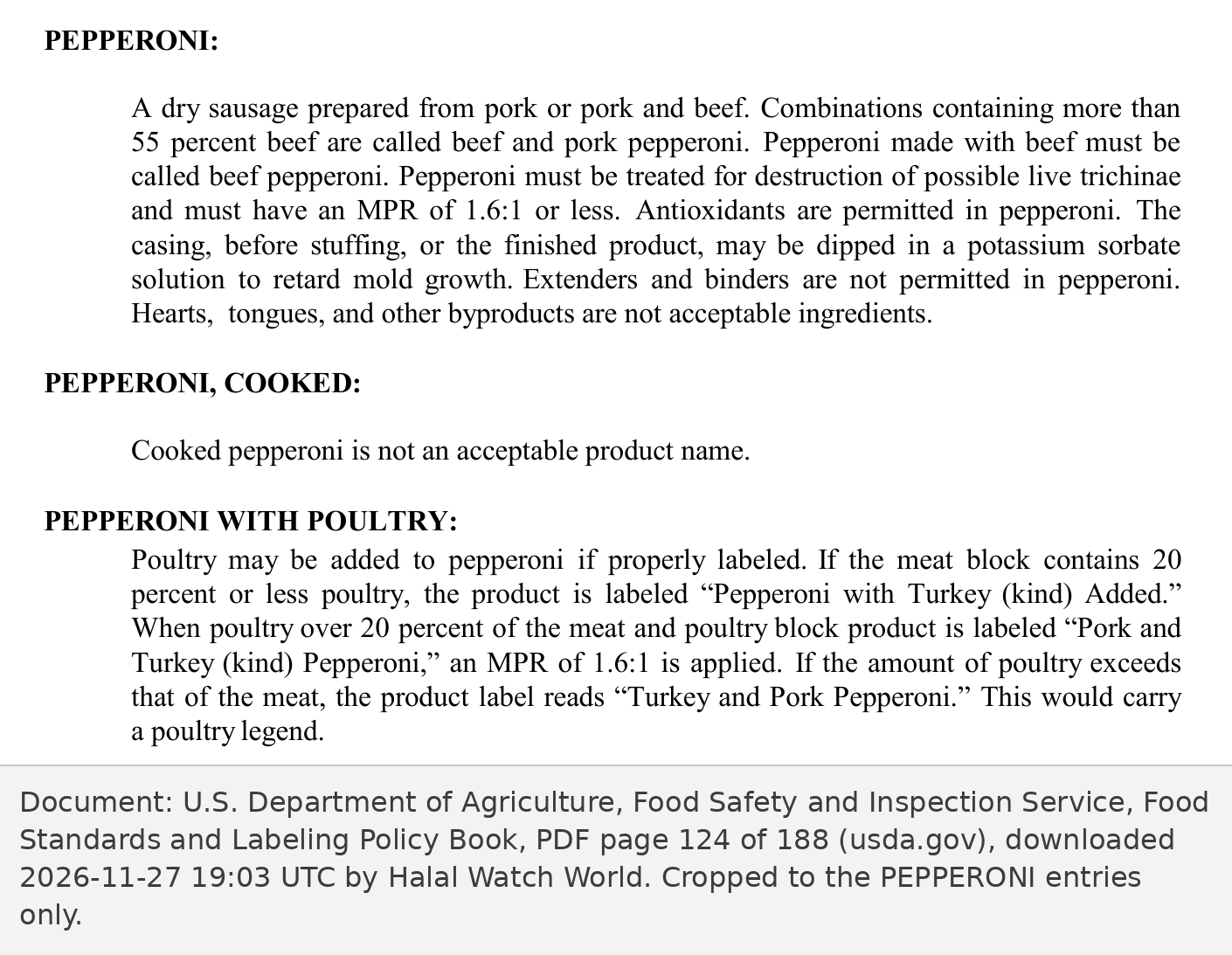
The same page adds that "Poultry may be added to pepperoni if properly labeled." If the meat block contains 20 percent or less poultry, the product is labeled "Pepperoni with Turkey (kind) Added." The policy book is guidance, and it says so itself: "Guidance documents lack the force and effect of law, unless expressly authorized by statute or incorporated into a contract." It is still FSIS's own statement of what the name means, and the products we read match it. A package that says only "pepperoni" is made from pork, or from pork and beef. A product made from beef alone is named for it, and so are the turkey pepperonis we read.
The ingredient list says which meat is in the package. Federal rules require that "The list of ingredients shall show the common or usual names of the ingredients arranged in the descending order of predominance, except as otherwise provided in this paragraph" (9 CFR 317.2(f)(1)). So a list that begins "Pork, Beef, Salt" puts pork first, then beef, then salt. Hormel's page for its Original Pepperoni lists exactly that.
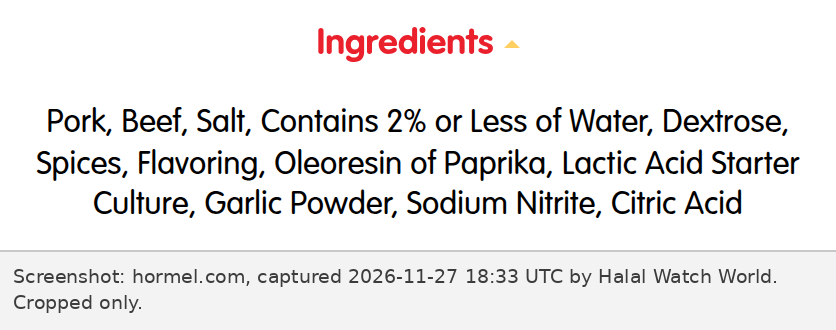
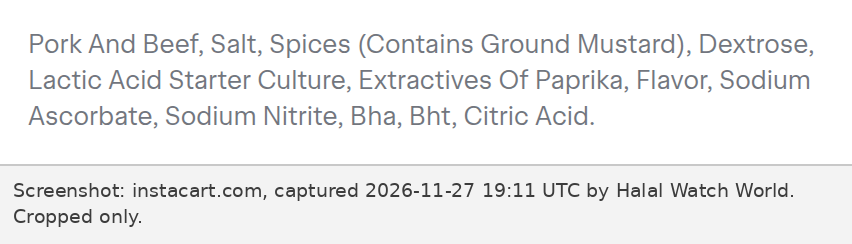
There are two exceptions. Ingredients that make up 2 percent or less by weight may be listed out of order at the end, after a statement of the amount (9 CFR 317.2(f)(1)(vi)(A)), which is why most of the lists we read run "Contains 2% or less of" before the last few ingredients. And when two meats together make up at least 70 percent of the meat, and neither is less than 30 percent, a maker may interchange them without changing the label, but the label must then put the word "and" between them instead of a comma (9 CFR 317.2(f)(1)(v)). That is why Oscar Mayer's list begins "Pork And Beef," and Hormel's Pepperoni with Jalapeno begins "Pork and Beef," and for those two products the order does not show which meat there is more of. Either way, both meats are in the package.
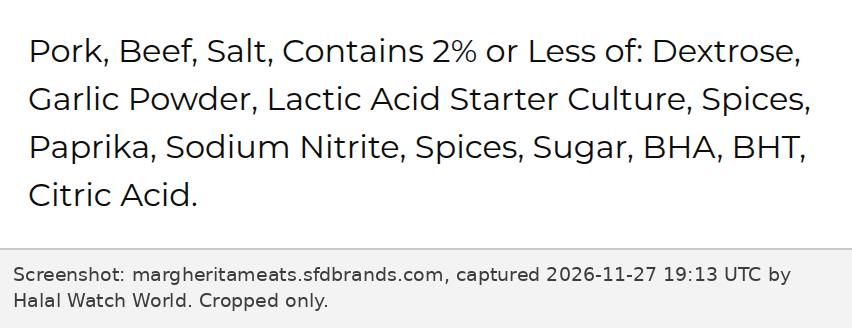
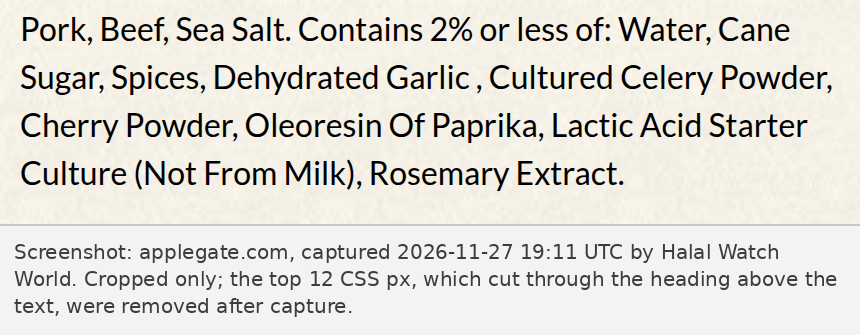
The pattern repeats across brands. Margherita's Italian Style pepperoni lists "Pork, Beef, Salt," and Applegate's Naturals Pork & Beef Pepperoni lists "Pork, Beef, Sea Salt."
Of the 41 products in this report, 29 list pork. Twenty-five of them list pork and beef, and four list pork alone: Dietz & Watson, Volpi, Trader Joe's and Simple Truth. Nine of the 29 are sold as "uncured" or "natural," and they are pork as well. "Uncured" on these labels describes how the meat is cured, not which animal it came from, and Hormel's uncured pepperoni lists "Cultured Celery Powder" after the pork and beef. Brand pages say the same thing in words. Hormel's page for its Original Pepperoni Bites says they are "Crafted from select cuts of pork and beef," and Boar's Head's page for its uncured pepperoni says it is "Crafted from a premium blend of pork & beef."
The six beef and turkey products with no halal claim say what they are in their names: Hormel's "SLICED PEPPERONI ALL BEEF 10#," Cattleman's Cut "Beef Pepperoni," and the turkey pepperonis of Hormel, Applegate, Margherita and Boar's Head. That matches the policy book, which requires pepperoni made with beef to be called beef pepperoni. A pepperoni with no such word in its name is pork, or pork and beef.
Pepperoni Casings: Pork, Beef or Neither?
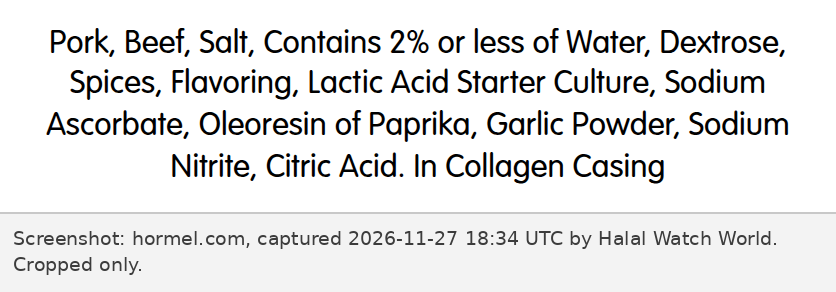
Some pepperoni is stuffed into a casing. Five of the pork products we read end their ingredient statements with "In Collagen Casing": Hormel's Pepperoni Cup and Crisp, Minis, Twin Links and Sticks, and Hormel Foodservice's Rosa Grande Cup & Char Pepperoni. The statement names no animal.
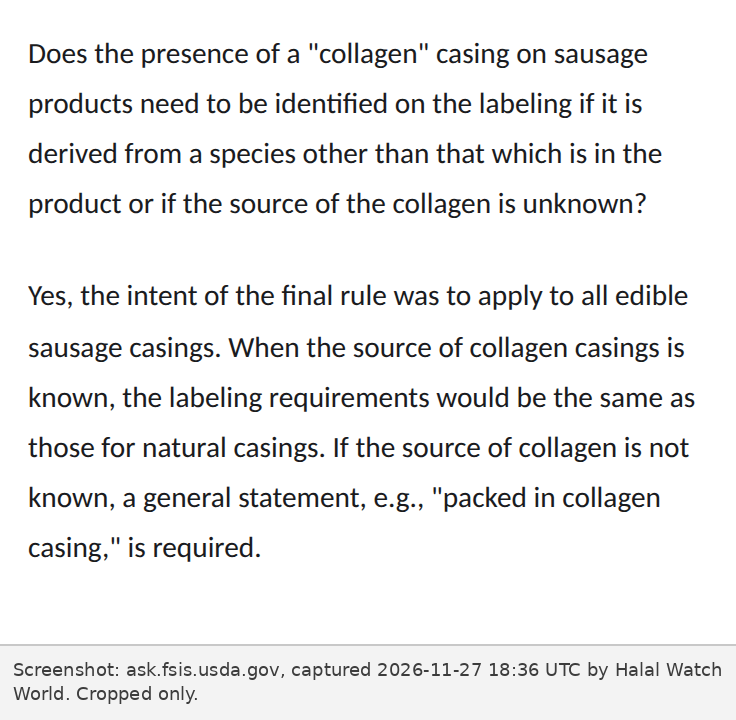
Federal rules require the label to disclose a collagen casing: "The labels of sausages encased in regenerated collagen casings shall disclose this fact on the product label" (9 CFR 317.8(b)(38)). They do not require it to name the animal. USDA's askFSIS service answers a question about this directly: "If the source of collagen is not known, a general statement, e.g., 'packed in collagen casing,' is required."
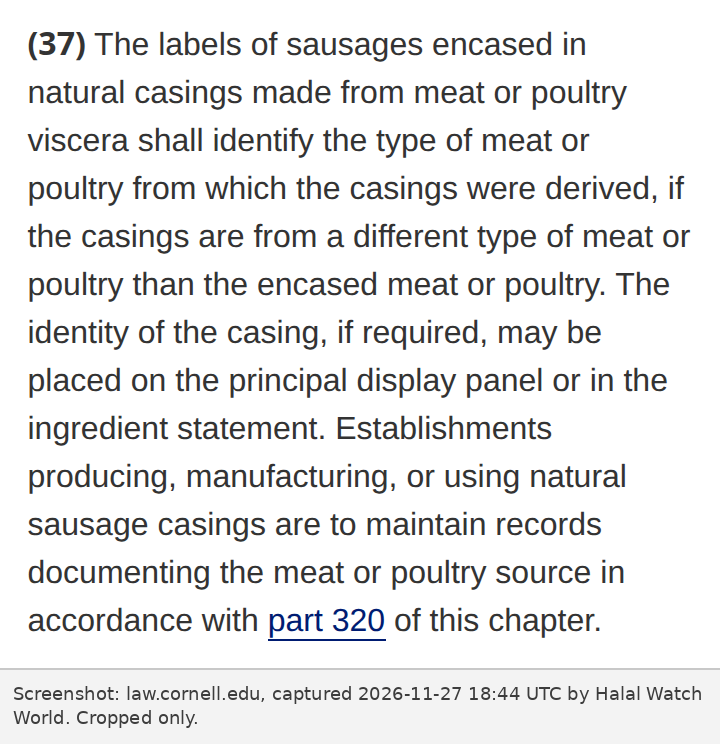
Natural casings follow a different rule. The label must identify the animal only "if the casings are from a different type of meat or poultry than the encased meat or poultry" (9 CFR 317.8(b)(37)). A pork casing on a pork sausage, or a beef casing on a beef sausage, needs no mention. Boar's Head's page describes its pork and beef pepperoni as "Packed into a natural edible casing," and the Kroger listing for its turkey pepperoni says "Natural casing." Neither names the animal.
For halal this matters in one way. Halal Watch World's standard for manufacturers says that where a manufacturer produces gelatin or collagen from animal sources, "the source shall be halal-slaughtered and certified. Pork-derived gelatin and collagen are impermissible" (HIPS 1003-A §8.6). A collagen casing whose animal is not named is therefore one more thing a halal claim must account for. None of the three halal-claim pages we read says what kind of casing its pepperoni has. No grade in this report rests on the casings, because every product that mentions a collagen casing already lists pork.
Where the Name and the Pizza Topping Come From
The word is Italian. Merriam-Webster's word history gives "Italian peperoni cayenne peppers, plural of peperone, augmentative of pepe pepper, from Latin piper," and says "The first known use of pepperoni was in 1888."
Britannica gives a later first use, and the two sources disagree: "The first recorded use of pepperoni was by Italian Americans in New York City in 1919; however, the food's origin is more generally traced to the late 19th and early 20th centuries." It also notes that the Italian word means peppers, not a sausage: "In Italy, a pepperoni pizza is one topped with peppers." So the name carries no hint of the meat. In the United States it came to mean the dry sausage of pork, or pork and beef, that the policy book defines above, and a great deal of it goes on pizza. A 2019 newsroom item from Hormel Foods reports figures given to NPR's The Indicator podcast by a Hormel Foods Foodservice pizza toppings brand manager: about 3 billion pizzas eaten in the United States each year, 36 percent of the pizzas made with pepperoni, and about 414 million pounds of pepperoni produced each year. The item says that "roughly 51 percent of pepperoni produced in the United States ends up on pizza." That is a 2019 estimate reported by one company, not a current figure.
Is Pepperoni Halal?
Not if it contains pork, and in the United States most of it does. Halal Watch World's list of "those things considered non-halal" includes "(b) Pork." (HIPS 1001 §1.3.2). It adds that "Pig-derived material remains categorically excluded under §1.3.2(b) regardless of school of thought" (HIPS 1001 §1.3.3(d)), and its appendix on impurity lists "Pig (all parts, including skin and bones), whether alive or dead." among impure things (HIPS 1001 Appendix B). A pepperoni that lists pork fails, and so does a pepperoni of pork and beef, because the pork cannot be taken out of it. Whatever the beef in it was, the pork decides the grade. Pepperoni is also a cured and smoked sausage, and the standard warns that such products "commonly use alcohol-based marinades, wine reductions, or other alcohol-containing ingredients" and must be reviewed under its rules on alcohol (HIPS 1003-A §8.6). None of the pork or beef pepperoni ingredient lists we read names wine, brandy or alcohol as an ingredient.
Beef, turkey and chicken are different from pork, because they are not forbidden in themselves. Halal Watch World's standard places meat among the things that are "categorically permissible or prohibited to consume according to the sharʿī conditions that are present," and adds: "If the proper conditions are not maintained, then the consumption of the item is prohibited" (HIPS 1001 §1.4.1.2). Its list of non-halal things includes "(e) Animals not slaughtered according to Islamic ritual rites." and "(f) Carrion." (HIPS 1001 §1.3.2). So a beef or turkey pepperoni needs positive evidence that the animal was slaughtered properly before it is permitted. Being free of pork is not that evidence.
Halal Watch World's slaughter standard accepts the verse of the Qur'an that permits the food of the People of the Book (quoted in The Religious Basis below): "This is the broader Islamic permissibility, supported by the Qurʼanic verse (5:5) that the food of the People of the Book is lawful for Muslims." It then explains why the verse cannot simply be assumed for U.S. commercial meat: "The North American context. In the United States, Canada, and Mexico, the slaughter industry is staffed by a workforce that includes Muslims, Jews, Christians, and individuals of no professed faith or of faiths outside Ahlul Kitāb." In a typical plant, it adds, "the religious identity of any given line worker is not determinable without specific verification" (HIPS 1003-C §4.1, Slaughterer Eligibility and Competency). Halal Watch World's Certification Methodology & Analysis Report draws the same conclusion: "Thus, in western nations, and in America in particular, meat slaughtered by general companies who employ people from the general populace are doubtful sources at best. We cannot, and must not believe that this food comes from the people of the book when the establishments themselves do not even make such a claim." Among its reasons it lists: "There is a high probability that US Slaughtermen are not Muslim, nor people of the book. This fact increases doubt, which further strengthens the position of its impermissibility for consumption."
The manufacturer's standard sets out what a halal pepperoni would have to show. "All livestock-derived raw materials shall be sourced from facilities holding a current halal certificate per HIPS 1002:2026 §2.5.2.1. The Halal Disclosure Statement is not acceptable for animal-derived raw materials per HIPS 1001 Appendix A" (HIPS 1003-A §8.6), and sausage-making is named in the section on poultry and raw meat: "The upstream slaughter operation shall be a separately certified facility under HIPS 1003-C (Halal Livestock Processor) and shall be listed as the supplier" (HIPS 1003-A §8.14). The general rule is the same: "A Halal Disclosure Statement shall not be acceptable in lieu of a certificate for animal-derived ingredients" (HIPS 1001 §2.6.2). A maker's word that its pepperoni is halal is a claim. A certificate is the proof.
Where pork is made in the same plant, the standard asks for more: "Where pork is processed in any part of the facility, separation requirements escalate per HIPS 1003 §1.5.7 (PCR speciation testing) and HIPS 1003 §1.5.6 (najāsa cleansing protocol where contamination occurs)" (HIPS 1003-A §8.6). The speciation standard is titled "Speciation Testing for Pork, Donkey, Carnivorous Animals" (HIPS 1003 §1.5.7). The same list of non-halal things includes "(l) Anything processed, made, produced, manufactured, and/or stored using utensils, equipment, and/or machinery in contact with item (g) that have not been cleansed according to standards which remove contaminants," and item (g) is "All forms of filth (najāsa) ..." (HIPS 1001 §1.3.2). That is why it matters whether a halal pepperoni is made in a plant that also makes pork pepperoni, and none of the three halal-claim pages we read answers it. The slaughter of animals for halal, and why stunning is a separate question, is covered in our article Animal Stunning: Halal or Haram?.
Pepperoni With a Halal Claim
Three of the products we read tell shoppers that they are halal. None of the pages names a certifying body, and we have not seen a certificate for any of them. Halal Watch World does not name other certification organizations, and none is named here.
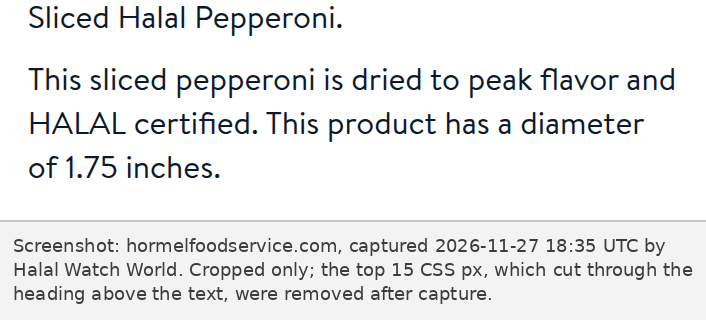
Hormel Foodservice sells a HALAL Pepperoni in two case sizes, 10 pounds (2 packs of 5 pounds) and 25 pounds (2 packs of 12.5 pounds). Its product pages say: "This sliced pepperoni is dried to peak flavor and HALAL certified." Its ingredient list begins "Chicken, Beef, Turkey, Salt" and names no pork. The page does not say who certified it, which plant makes it, or how the animals were slaughtered, and it does not say whether the product is made on equipment that also makes Hormel's pork pepperoni.
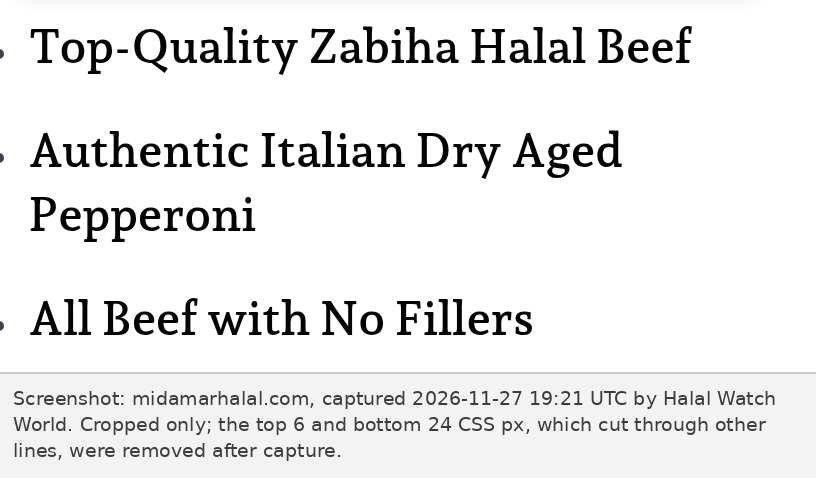
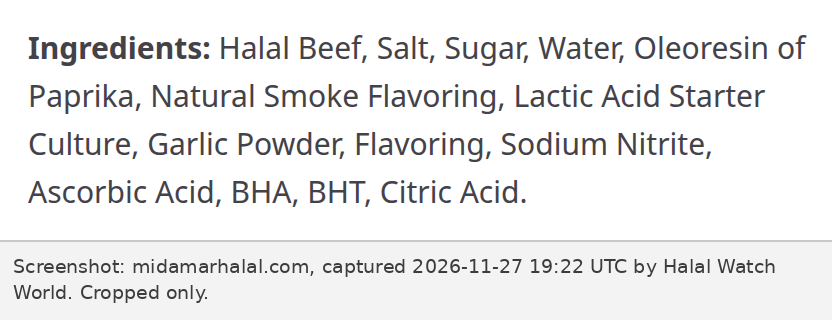
Midamar Halal sells a Halal Sliced Beef Pepperoni, in a 5-pound pack or a 10-pound case of 2 packs. Its product page describes it with three bullets, and its ingredient list begins "Halal Beef, Salt, Sugar, Water." The page says the pepperoni is "Top-Quality Zabiha Halal Beef" and "All Beef with No Fillers." Midamar's website footer says "Certified Halal" and offers a link to its certificate, which Halal Watch World has not reviewed.
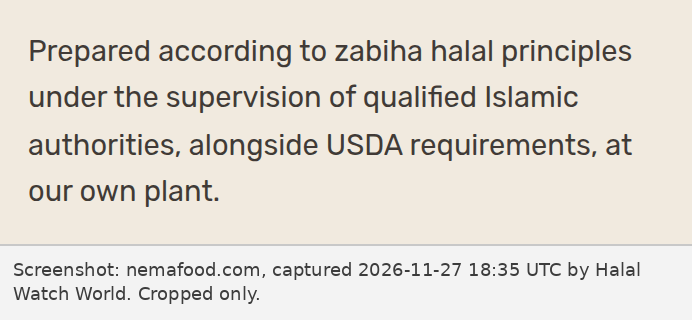
Nema Food Corp. sells a Nema Beef Pepperoni marked "Zabiha Halal." Its page says the pepperoni is "Prepared according to zabiha halal principles under the supervision of qualified Islamic authorities, alongside USDA requirements, at our own plant." It says the pepperoni is made with "beef, garlic, and paprika," but it publishes no ingredient list and names no certifying body.
These are the only three products in this report that say they are halal. Their claims are specific, none of them lists pork, and nothing known makes them haram. A claim is not a certificate (HIPS 1001 §2.6.2, and HIPS 1003-A §8.6 and §8.14, quoted above), and we have not seen the certificates, the certifying bodies, the slaughter facilities or the slaughter procedures, so we cannot say that these products are certainly halal. We accept the makers' claims, and we grade all three HALAL TO CONSUME, as far as we can tell. That is not a halal certification, and full confirmation would come only with certification that we can check. We encourage Hormel Foodservice, Midamar and Nema to publish their certificates.
Beef and Turkey Pepperoni With No Halal Claim
Six products in this report are made from beef or turkey and make no halal claim on the pages we read: Hormel's Sliced Pepperoni All Beef (10 lb), Cattleman's Cut Beef Pepperoni, and the turkey pepperonis of Hormel, Applegate, Margherita and Boar's Head. They are not pork, and they are not forbidden because of what they are. They fail for the reason given above. Halal Watch World's standard treats meat as conditionally permissible, and the Methodology Report states the consequence for U.S. meat: "Since US slaughtermen are not required to abide by the same rules ... non-religious meat slaughtered in the US is not permissible to consume carte blanche, and requires verification to determine its permissibility. Absent a declaration that the proper method of slaughter was performed, no permission to consume exists, and should not be assumed." None of these six makers says how its animals were slaughtered.
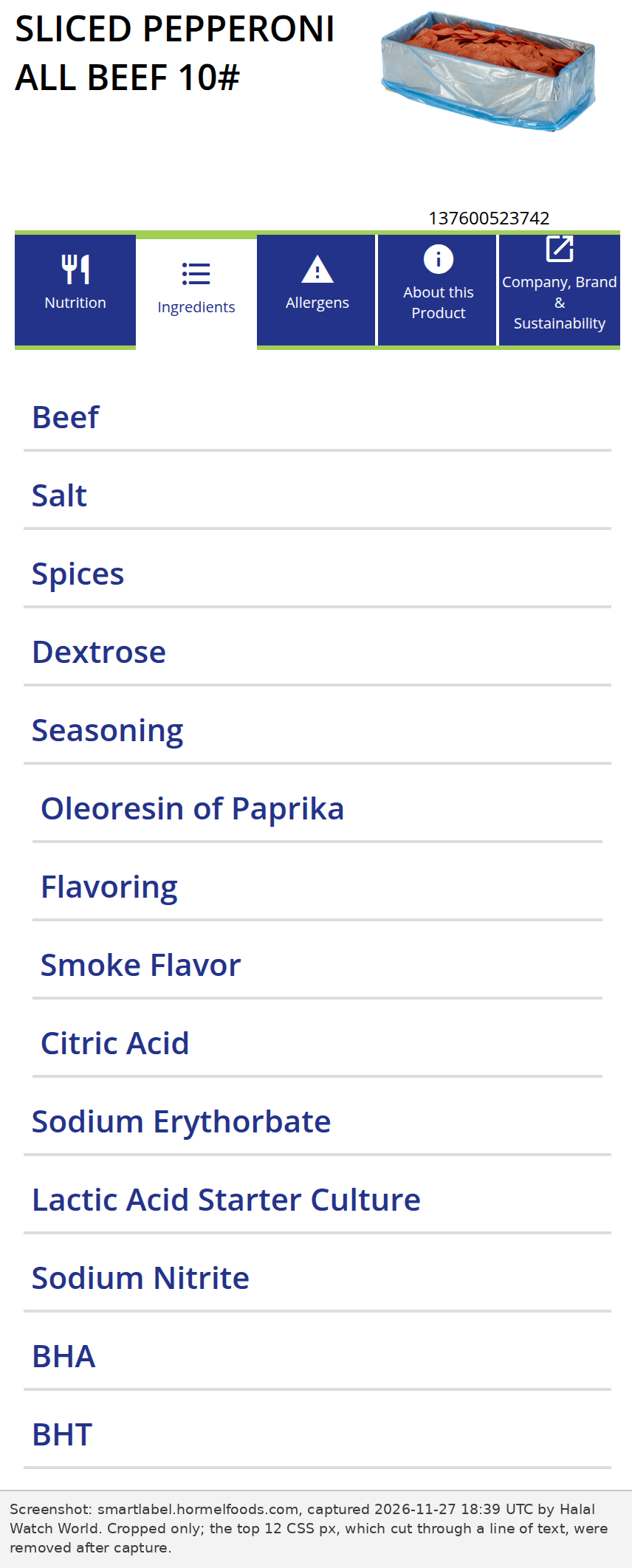
Hormel's all-beef pepperoni shows the point. Its SmartLabel page lists the ingredients one per line, from "Beef" to BHT, and it shows no halal claim.
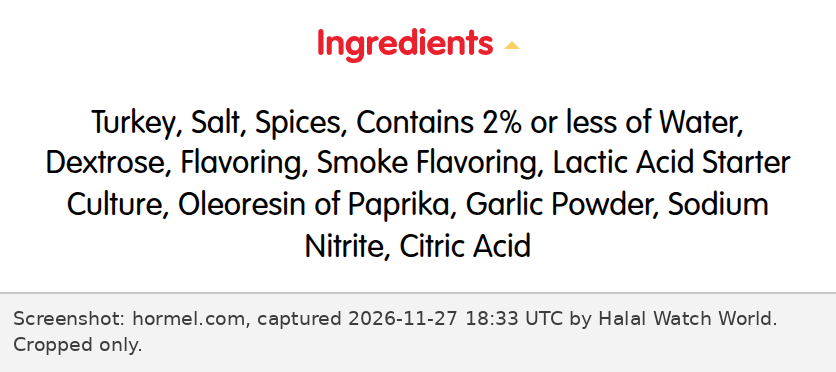
Hormel's turkey pepperoni lists turkey first. A turkey pepperoni is poultry, and the poultry rule in HIPS 1003-A §8.14, quoted above, applies to it the same way.
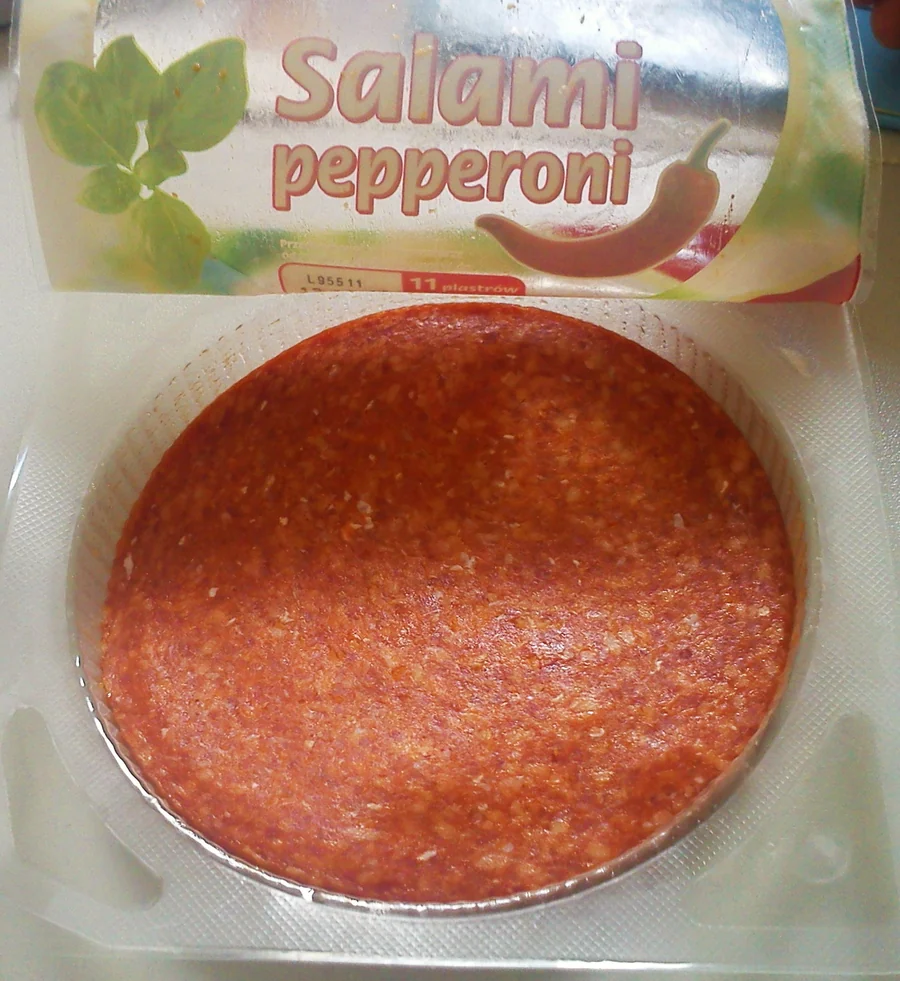
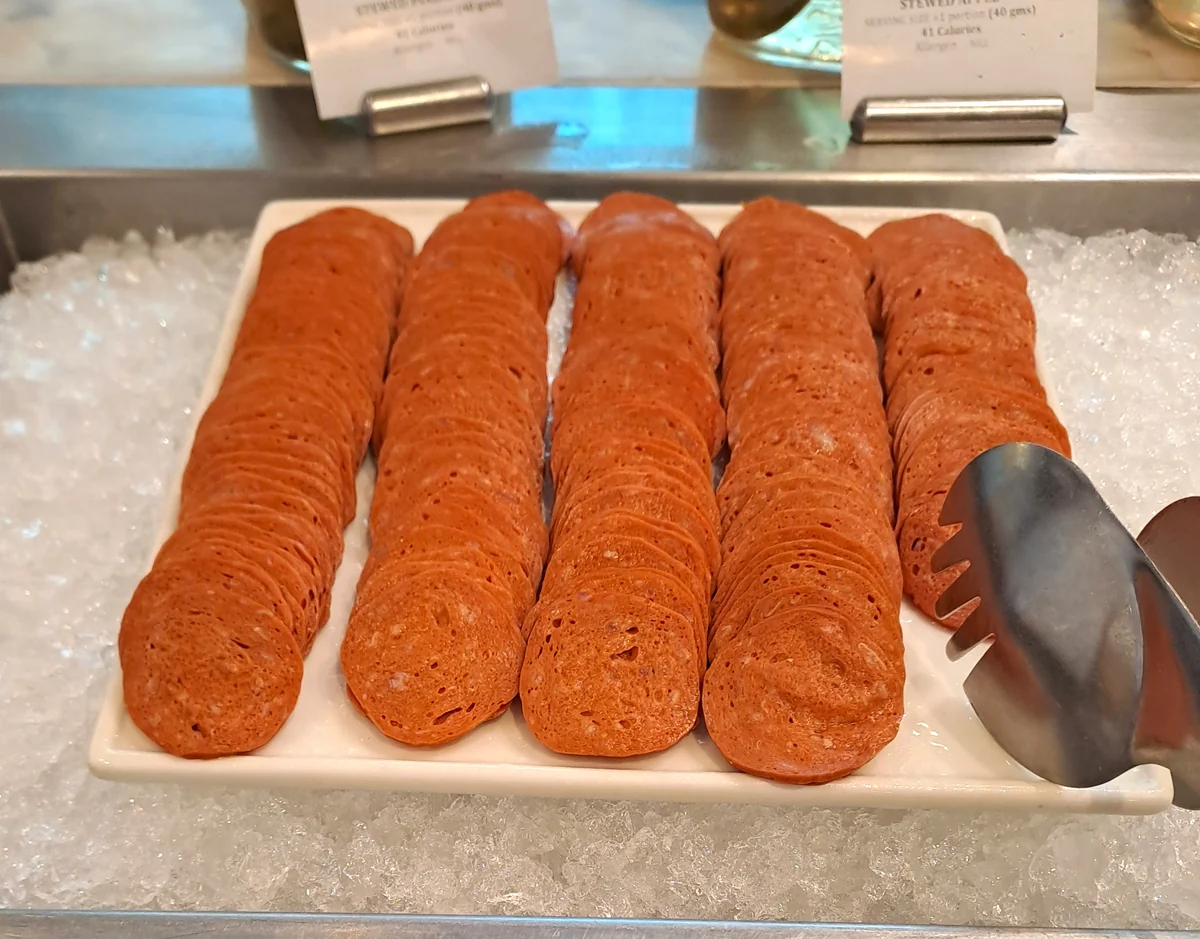
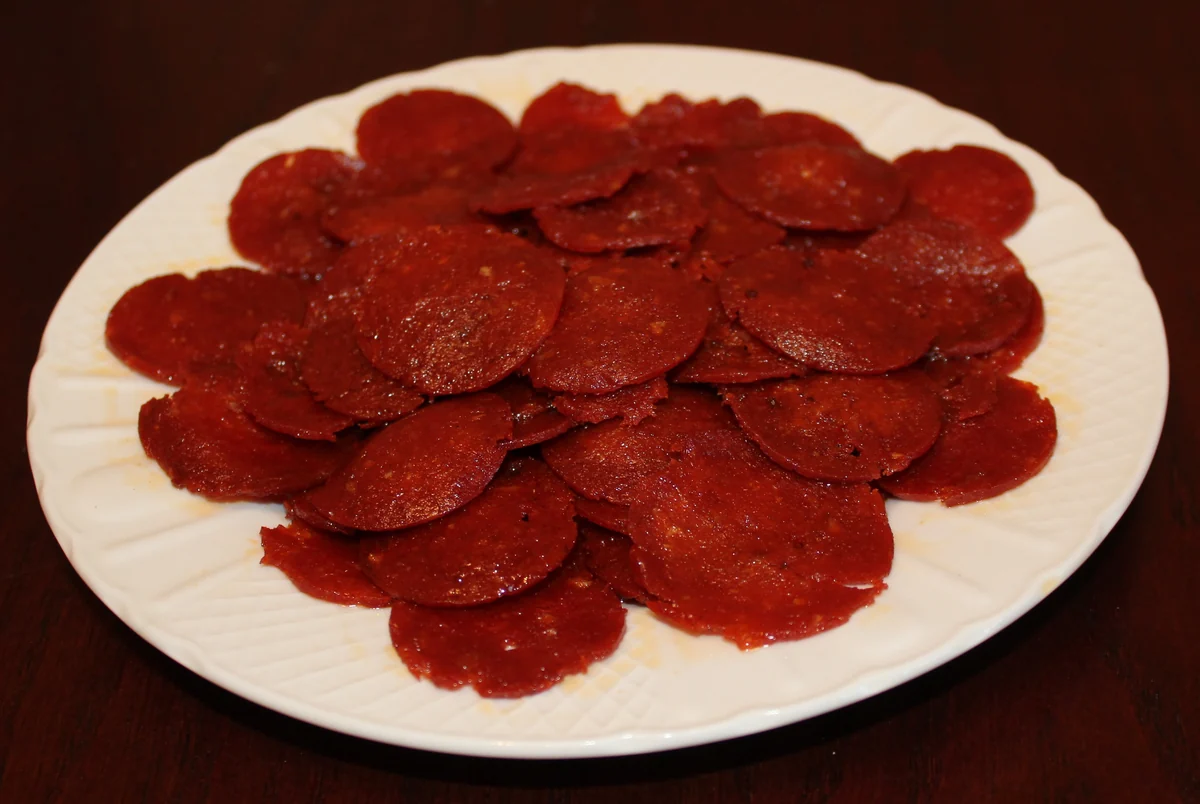
Pepperoni is not always beef, pork or turkey. The photograph below shows sliced lamb pepperoni. None of the products we graded is made from lamb.
Plant-Based Pepperoni
A plant-based pepperoni has no pork or beef in it, so the question moves to its other ingredients. Three plant-based pepperonis are in this report. The flavoring is the first thing to check, because the federal definition of natural flavor allows it to come from an animal. The rule, 21 CFR 101.22(a)(3), covers flavoring constituents "derived from a spice, fruit or fruit juice, vegetable or vegetable juice, edible yeast, herb, bark, bud, root, leaf or similar plant material, meat, seafood, poultry, eggs, dairy products, or fermentation products thereof, whose significant function in food is flavoring rather than nutritional." The word "natural" does not say which of these a flavor came from.
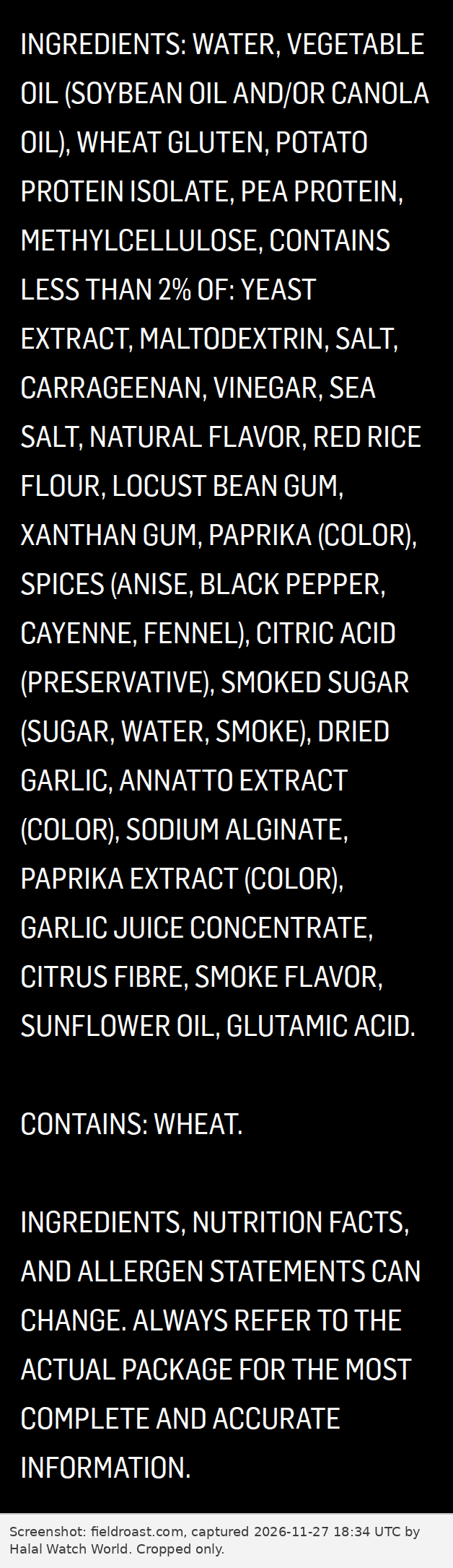
Field Roast's Plant-Based Pepperoni lists "NATURAL FLAVOR" and "SMOKE FLAVOR," and the product's page marks it with a Vegan logo (the image is labeled "Vegan" in the page's code). A vegan product contains no meat, so its natural flavor cannot be a meat flavor, and nothing else in the list is known to be haram. Its "VINEGAR" does not name a source, and nothing about it is known to be haram. We grade it HALAL TO CONSUME, as far as we can tell. That is not a halal certification: the page we read does not say whether the product is made on equipment that also handles meat, and full confirmation would come only with certification.
Tofurky's Pepp'roni lists "natural flavors" and "enzyme," and the page lists Vegan among its product labels, so those two are settled in the same way. The ingredient that decides its grade is "buffered and dried brandy vinegar." Brandy is a distilled alcoholic drink, usually made from wine or another fermented fruit juice, and Halal Watch World's standard says: "Ethanol from grape, date, or barley sources is impermissible in halal product. Ethanol from petrochemical, synthetic, or non-grape/date/barley fermentation sources is permissible up to the negligible-amount threshold of 0.5% v/v in finished product (or 0.1% in certain jurisdictions), provided it was not produced with the intent to intoxicate" (HIPS 1003-A §5.2). Halal Watch World's Methodology Report addresses vinegar made from alcohol: "The prophet forbade the conversion of alcohol to vinegar in cases where the substance was initially intended to be consumed as an intoxicant. However, he did not forbid the production, nor the consumption of vinegar." It names intention as a necessary condition for that concession: "The intention is a necessary condition, in that the substance's initial conversion from halal to haram mustn't have been the intended outcome." Brandy is made to be drunk, so a vinegar made from brandy does not meet that condition. When the Prophet (peace be upon him) was asked whether wine could be used for vinegar, he said no (Jami` at-Tirmidhi 1294, quoted with its Arabic in The Religious Basis below), and Halal Watch World reads that answer strictly. Tofurky's page does not say how its brandy vinegar is made or whether any ethanol remains, and the grade does not depend on either. We grade Tofurky's Pepp'roni FAIL because of its brandy vinegar.
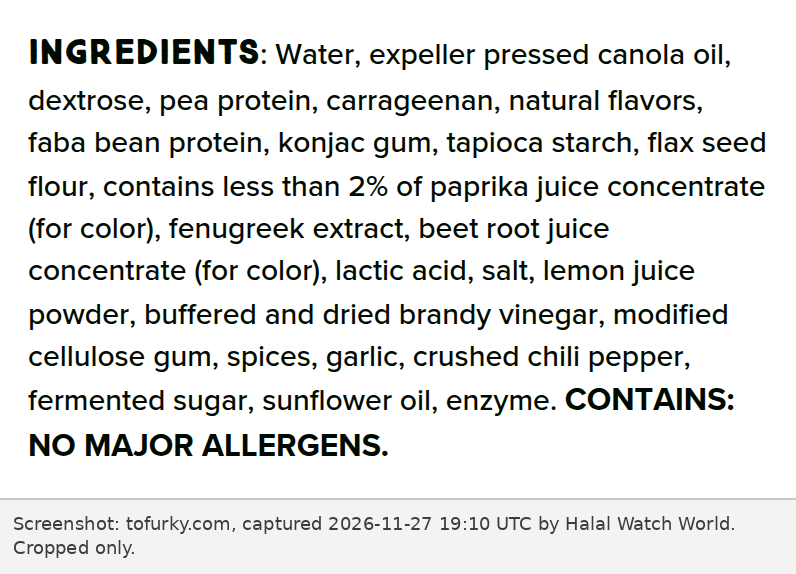
Sweet Earth's Italian Style Pepperoni plant-based deli slices list "Natural Flavor" and "Natural Smoke Flavor," and we saw no vegan statement for them. The text we have is the retail listing on Kroger's website. Sweet Earth's own website showed an error page when we read it on November 27, 2026. A natural flavor of undisclosed source can be from meat under 21 CFR 101.22(a)(3), so it is an ingredient known to possibly come from a haram source. We grade it DOUBTFUL, and we advise caution and refraining from it until the source is disclosed or the product is certified halal. If Sweet Earth states that its flavors are plant-derived, Halal Watch World will review this grade.
The Four Pizza Chains
Most pepperoni is eaten on pizza, so we also read what four pizza chains say about theirs. All four state on their own pages that their pepperoni contains pork. We found no halal claim on any of the pages we read.
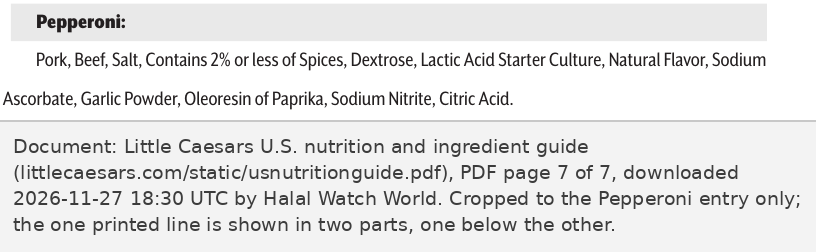
Little Caesars' U.S. nutrition and ingredient guide lists its pepperoni as "Pork, Beef, Salt, Contains 2% or less of Spices, Dextrose, Lactic Acid Starter Culture, Natural Flavor," followed by five more ingredients.
Domino's ingredients page lists "Pepperoni [Pork and Beef, Salt, Spices, Dextrose, Lactic Acid Starter Culture, Natural Flavors, Oleoresin of Paprika, Sodium Ascorbate, Sodium Nitrite, Citric Acid]." Pizza Hut's pepperoni page answers "What is in Pizza hut pepperoni?" with "Our pepperoni is made with: pork, beef, salt, contains 2% or less of: spices, dextrose, lactic acid starter culture, natural spice extractives, extractives of paprika, extractives of rosemary, sodium nitrite." Papa Johns' pepperoni page asks "What Kind of Pepperoni Does Papa Johns Use?" and answers: "Papa Johns pepperoni is a mix of both pork and beef."
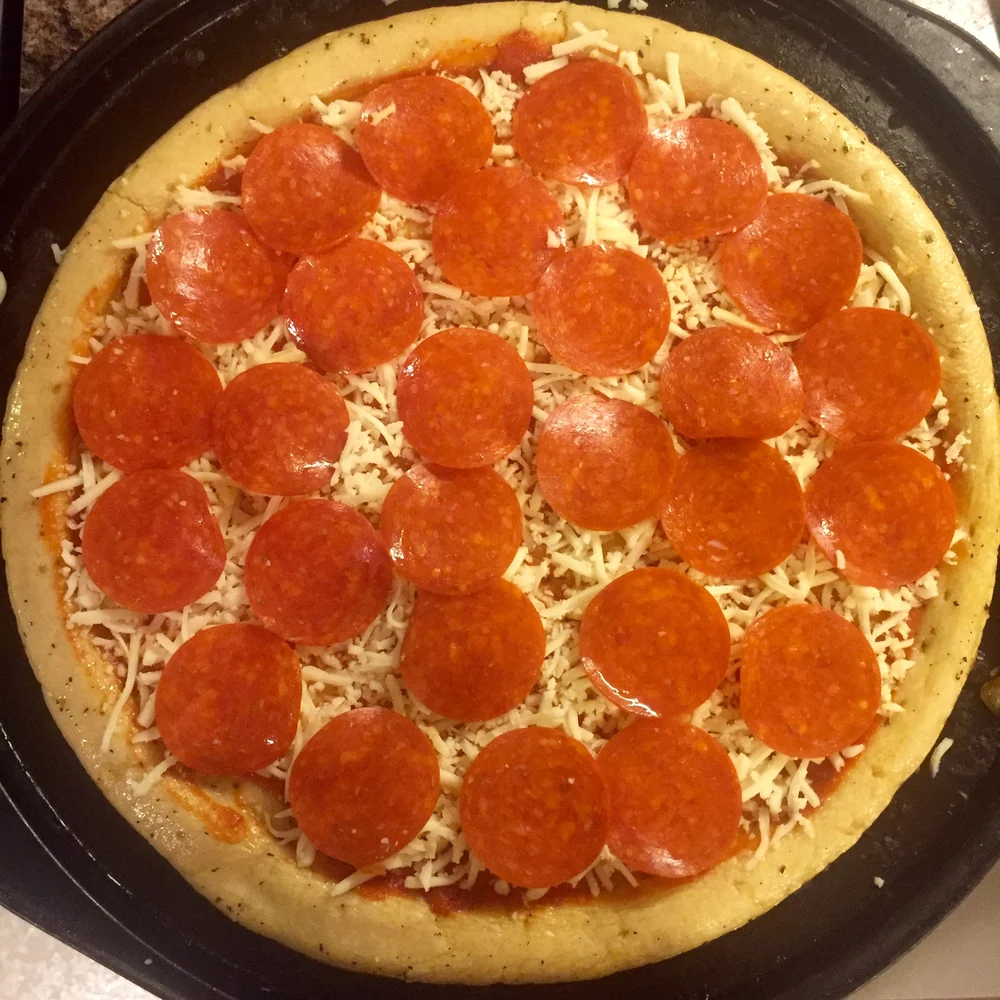
A pepperoni pizza from any of these chains has pork on it, so it fails the Halal Watch standard. We graded only the pepperoni. A pizza without pepperoni from the same kitchen is outside this report, but that kitchen handles pork, and Halal Watch World's rule for restaurants, described under How We Graded, advises caution about cross-contamination. For what a restaurant needs before it can call food halal, see Halal Certification for Restaurants.
Every Pepperoni We Checked
These are the 41 pepperoni products and the 4 pizza chains in this report. The middle column quotes the start of each ingredient list as the company or store published it. Halal Watch World has not corrected its spelling, capitalization or punctuation. Sizes and packages that share one statement are one row.
| # | Product | What the company lists | Grade |
|---|---|---|---|
| 1 | HORMEL Original Pepperoni (1.75 oz, 3.5 oz and 6 to 32 oz packages) | Begins "Pork, Beef, Salt" | FAIL |
| 2 | HORMEL Pepperoni Cup and Crisp (5 oz) | Begins "Pork, Beef, Salt, Contains 2% or less of Water"; ends "In Collagen Casing" | FAIL |
| 3 | HORMEL Pepperoni Minis (5 oz) | Begins "Pork, Beef, Salt"; ends "In Collagen Casing" | FAIL |
| 4 | HORMEL Pepperoni Twin Links | Begins "Pork, Beef, Salt"; ends "In Collagen Casing" | FAIL |
| 5 | HORMEL Pepperoni Sticks (20 oz pack) | Begins "Pork, Beef, Salt"; ends "In Collagen Casing" | FAIL |
| 6 | HORMEL Original Pepperoni Bites (4 oz) | Begins "Pork, Beef, Salt, Contains 2% or Less of Water" | FAIL |
| 7 | HORMEL Pepperoni Bites Dill Pickle Flavored (4 oz) | Begins "Pork, Beef, Salt" | FAIL |
| 8 | HORMEL Dill Pickle Flavored Pepperoni | Begins "Pork, Beef, Salt" | FAIL |
| 9 | HORMEL Pepperoni with Jalapeno | Begins "Pork and Beef, Salt" | FAIL |
| 10 | HORMEL Uncured Pepperoni and HORMEL NATURAL CHOICE Uncured Pepperoni (5 oz) | Begins "Pork, Beef, Salt"; also lists "Cultured Celery Powder" | FAIL |
| 11 | HORMEL NATURAL CHOICE Uncured Sandwich Pepperoni (4 oz and 6 oz) | Begins "Pork, Beef, Salt, Contains 2% or less of Dextrose, Water" | FAIL |
| 12 | NATURAL CHOICE Uncured Pepperoni, All Natural (Hormel Foodservice, 2 x 5 lb) | Begins "Pork, Beef, Salt, Contains 2% or less of Water" | FAIL |
| 13 | ROSA GRANDE Cup & Char Pepperoni, Sliced (Hormel Foodservice, 2 x 12.5 lb) | Begins "Pork, Beef, Salt"; ends "In Collagen Casing" | FAIL |
| 14 | Oscar Mayer Pepperoni Slices (6 oz) | Begins "Pork And Beef, Salt, Spices (Contains Ground Mustard)" | FAIL |
| 15 | Eckrich Sliced Pepperoni (2.5 oz) | Begins "Pork, beef, salt, contains 2% or less of dextrose" | FAIL |
| 16 | Gallo Salame Deli Sliced Pepperoni (3 oz) | Begins "Pork, beef, salt, contains 2% or less of: corn syrup" | FAIL |
| 17 | Margherita Italian Style Pepperoni (8 oz) | Begins "Pork, Beef, Salt, Contains 2% or Less of: Dextrose" | FAIL |
| 18 | Margherita Pepperoni Stick (8 oz) | Begins "Pork, Beef, Salt, Contains 2% or Less of: Flavorings" | FAIL |
| 19 | Margherita Uncured Pepperoni | Begins "Pork, Beef, Salt, Spices, Contains 2% or Less of Dextrose" | FAIL |
| 20 | Applegate Naturals Pork & Beef Pepperoni | Begins "Pork, Beef, Sea Salt" | FAIL |
| 21 | Boar's Head Uncured Pepperoni (6 oz) | Begins "Pork, Beef, Salt, Dextrose, Paprika" | FAIL |
| 22 | Dietz & Watson Sliced Pepperoni | Begins "Pork, Salt, Spices, Dextrose, Sugar" (pork only) | FAIL |
| 23 | Volpi Gourmet Uncured Pepperoni (5 oz) | Begins "Pork, Sea Salt, Spices" (pork only) | FAIL |
| 24 | Mama Cozzi Original Pepperoni (ALDI, 6 oz) | Begins "Pork, Beef, Salt, Spices, Dextrose" | FAIL |
| 25 | Trader Joe's Uncured Mini Pepperoni (2 oz) | Begins "PORK, SEA SALT" (pork only) | FAIL |
| 26 | Kroger Sliced Pepperoni (7 oz) | Lists pork and beef first, then salt (the listing prints a space before each comma) | FAIL |
| 27 | Private Selection Pepperoni Deli Sliced (5 oz) | Begins "Pork, Beef, Salt, Contains 2% or Less of: Corn Syrup" | FAIL |
| 28 | Simple Truth Smoked Uncured Pork Pepperoni (4 oz) | Begins "Pork, Sea Salt, Cane Sugar" (pork only) | FAIL |
| 29 | Great Value Original Pepperoni (6 oz, store brand) | Begins "Pork Beef, Salt" (no comma between the first two, as printed) | FAIL |
| 30 | Hormel Sliced Pepperoni All Beef (10 lb) | Begins "Beef" (one ingredient per line); ends "BHT"; no halal claim | FAIL |
| 31 | Cattleman's Cut Beef Pepperoni (10 oz) | Begins "Beef, Water, Salt, Spices, Sugar, Vinegar"; no halal claim | FAIL |
| 32 | HORMEL Turkey Pepperoni (3, 5 and 16 oz) | Begins "Turkey, Salt, Spices"; no halal claim | FAIL |
| 33 | Applegate Naturals Turkey Pepperoni | Begins "Turkey, Sea Salt"; no halal claim | FAIL |
| 34 | Margherita Turkey Pepperoni | Begins "Turkey, Salt, contains 2% or less of Natural Flavors"; no halal claim | FAIL |
| 35 | Boar's Head Uncured Turkey Pepperoni (4.5 oz) | Begins "Turkey Salt, Contains 2% or Less of Natural Flavorings" (no comma after Turkey, as printed); no halal claim | FAIL |
| 36 | HORMEL HALAL Pepperoni (Hormel Foodservice, 2 x 5 lb and 2 x 12.5 lb) | Begins "Chicken, Beef, Turkey, Salt"; page says "HALAL certified"; no certificate seen | HALAL TO CONSUME |
| 37 | Midamar Halal Sliced Beef Pepperoni (5 lb) | Begins "Halal Beef, Salt, Sugar, Water"; page says "Zabiha Halal Beef"; no certificate seen | HALAL TO CONSUME |
| 38 | Nema Beef Pepperoni (10 oz) | No ingredient list; page says "Beef pepperoni made with beef, garlic, and paprika" and "Zabiha Halal"; no certificate seen | HALAL TO CONSUME |
| 39 | Field Roast Plant-Based Pepperoni | Begins "WATER, VEGETABLE OIL (SOYBEAN OIL AND/OR CANOLA OIL), WHEAT GLUTEN"; lists "NATURAL FLAVOR"; Vegan logo on page | HALAL TO CONSUME |
| 40 | Tofurky Pepp'roni | Begins "Water, expeller pressed canola oil, dextrose, pea protein"; lists "buffered and dried brandy vinegar"; page lists Vegan | FAIL |
| 41 | Sweet Earth Italian Style Pepperoni Plant-Based Deli Slices (6 oz) | Begins "Vital Wheat Gluten, Water, Apple Cider Vinegar"; lists "2% or Less of Natural Flavor"; no vegan statement seen | DOUBTFUL |
The chains:
| # | Pizza chain | What the chain says | Grade |
|---|---|---|---|
| 42 | Domino's | Ingredients page lists "Pepperoni [Pork and Beef, Salt, Spices, Dextrose" | FAIL |
| 43 | Pizza Hut | Page says "Our pepperoni is made with: pork, beef, salt" | FAIL |
| 44 | Papa Johns | Page says "Papa Johns pepperoni is a mix of both pork and beef" | FAIL |
| 45 | Little Caesars | U.S. nutrition guide lists "Pork, Beef, Salt, Contains 2% or less of Spices, Dextrose" | FAIL |
Totals: 40 FAIL, 4 HALAL TO CONSUME and 1 DOUBTFUL, for 45 items (41 products and 4 pizza chains). Where a row groups several packages, the company publishes the same statement for each, with one exception: Hormel publishes three slightly different statements for its Original Pepperoni. The 3.5 oz package also lists BHA and BHT, and the 1.75 oz and 3.5 oz pages write "2% or less" where the larger sizes write "2% or Less." The ingredient lists for Oscar Mayer, Eckrich, Great Value and Cattleman's Cut come from Instacart product listings, and those for Kroger, Private Selection, Simple Truth, Sweet Earth and both Boar's Head products come from Kroger website listings. The Mama Cozzi list comes from the ALDI page for the product. Great Value is a store brand, read on an Instacart listing. We have reproduced printing errors as we found them: Great Value's list has no comma after "Pork" and ends with the words "Bha,m Bht," the Boar's Head turkey list has no comma after "Turkey," and the Kroger list prints a space before each comma. Margherita's Italian Style list names "Spices" twice. Nema publishes no ingredient list, so its row shows what its page says. The Boar's Head turkey listing says "Natural casing" and the Hormel all-beef list is printed one ingredient per line.
The Religious Basis
Allah has forbidden the flesh of animals that die without proper slaughter, along with swine:
حُرِّمَتْ عَلَيْكُمُ ٱلْمَيْتَةُ وَٱلدَّمُ وَلَحْمُ ٱلْخِنزِيرِ وَمَآ أُهِلَّ لِغَيْرِ ٱللَّهِ بِهِۦ
"Prohibited to you are dead animals, blood, the flesh of swine, and that which has been dedicated to other than Allāh"
Qur'an, Surah Al-Ma'idah 5:3, opening of the verse, Saheeh International translation
And He commanded that we not eat what was slaughtered without His name:
وَلَا تَأْكُلُوا۟ مِمَّا لَمْ يُذْكَرِ ٱسْمُ ٱللَّهِ عَلَيْهِ وَإِنَّهُۥ لَفِسْقٌ
"And do not eat of that upon which the name of Allāh has not been mentioned, for indeed, it is grave disobedience."
Qur'an, Surah Al-An'am 6:121, opening of the verse, Saheeh International translation
Halal Watch World's Certification Methodology & Analysis Report applies these verses to meat in the United States: "non-religious meat slaughtered in the US is not permissible to consume carte blanche, and requires verification to determine its permissibility. Absent a declaration that the proper method of slaughter was performed, no permission to consume exists, and should not be assumed."
The Prophet Muhammad (peace be upon him) also taught how to treat the uncertain cases in between. That is why an ingredient known to possibly come from a haram source, such as a natural flavor whose source is not disclosed, is doubtful, and we advise refraining from it until the source is disclosed or the product is certified halal:
الْحَلاَلُ بَيِّنٌ وَالْحَرَامُ بَيِّنٌ، وَبَيْنَهُمَا مُشَبَّهَاتٌ لاَ يَعْلَمُهَا كَثِيرٌ مِنَ النَّاسِ، فَمَنِ اتَّقَى الْمُشَبَّهَاتِ اسْتَبْرَأَ لِدِيِنِهِ وَعِرْضِهِ
"Both legal and illegal things are evident but in between them there are doubtful (suspicious) things and most of the people have no knowledge about them. So whoever saves himself from these suspicious things saves his religion and his honor."
Sahih al-Bukhari 52, narrated by An-Nu'man bin Bashir, opening portion; also reported in Sahih Muslim 1599
The Qur'an names pork among the things that are forbidden:
قُل لَّآ أَجِدُ فِى مَآ أُوحِىَ إِلَىَّ مُحَرَّمًا عَلَىٰ طَاعِمٍ يَطْعَمُهُۥٓ إِلَّآ أَن يَكُونَ مَيْتَةً أَوْ دَمًا مَّسْفُوحًا أَوْ لَحْمَ خِنزِيرٍ فَإِنَّهُۥ رِجْسٌ أَوْ فِسْقًا أُهِلَّ لِغَيْرِ ٱللَّهِ بِهِۦ ۚ فَمَنِ ٱضْطُرَّ غَيْرَ بَاغٍ وَلَا عَادٍ فَإِنَّ رَبَّكَ غَفُورٌ رَّحِيمٌ
"Say, 'I do not find within that which was revealed to me [anything] forbidden to one who would eat it unless it be a dead animal or blood spilled out or the flesh of swine - for indeed, it is impure - or it be [that slaughtered in] disobedience, dedicated to other than Allāh. But whoever is forced [by necessity], neither desiring [it] nor transgressing [its limit], then indeed, your Lord is Forgiving and Merciful.'"
Qur'an, Surah Al-An'am 6:145, Saheeh International translation
The prohibition is repeated in Surah Al-Baqarah, together with the allowance for necessity:
إِنَّمَا حَرَّمَ عَلَيْكُمُ ٱلْمَيْتَةَ وَٱلدَّمَ وَلَحْمَ ٱلْخِنزِيرِ وَمَآ أُهِلَّ بِهِۦ لِغَيْرِ ٱللَّهِ ۖ فَمَنِ ٱضْطُرَّ غَيْرَ بَاغٍ وَلَا عَادٍ فَلَآ إِثْمَ عَلَيْهِ ۚ إِنَّ ٱللَّهَ غَفُورٌ رَّحِيمٌ
"He has only forbidden to you dead animals, blood, the flesh of swine, and that which has been dedicated to other than Allāh. But whoever is forced [by necessity], neither desiring [it] nor transgressing [its limit], there is no sin upon him. Indeed, Allāh is Forgiving and Merciful."
Qur'an, Surah Al-Baqarah 2:173, Saheeh International translation
When it cannot be known whether the name of Allah was pronounced over an animal, the Prophet (peace be upon him) told the questioner not to eat it. 'Adi bin Hatim asked him about game caught by his hunting dog when another dog had joined it:
قُلْتُ فَإِنْ وَجَدْتُ مَعَ كَلْبِي كَلْبًا آخَرَ فَلاَ أَدْرِي أَيُّهُمَا أَخَذَهُ قَالَ " فَلاَ تَأْكُلْ فَإِنَّمَا سَمَّيْتَ عَلَى كَلْبِكَ وَلَمْ تُسَمِّ عَلَى غَيْرِهِ "
"I (again) said: If I find along with my dog another dog, and do not know which of (the dogs) has caught (the game). then (what should I do)? Thereupon he ('Allah's Messenger) said: Then don't eat that, for you recited the name of Allah on your dog and not on the other one."
Sahih Muslim 1929c, narrated by 'Adi b. Hatim, closing portion
The verse that permits the food of the People of the Book is the one most often raised about meat in the United States. Halal Watch World's standard accepts it, and explains above why it cannot be assumed for meat whose seller makes no such claim:
ٱلْيَوْمَ أُحِلَّ لَكُمُ ٱلطَّيِّبَـٰتُ ۖ وَطَعَامُ ٱلَّذِينَ أُوتُوا۟ ٱلْكِتَـٰبَ حِلٌّ لَّكُمْ وَطَعَامُكُمْ حِلٌّ لَّهُمْ
"This day [all] good foods have been made lawful, and the food of those who were given the Scripture is lawful for you and your food is lawful for them."
Qur'an, Surah Al-Ma'idah 5:5, opening of the verse, Saheeh International translation
Tofurky's Pepp'roni fails because of its brandy vinegar. The text that decides it is the Prophet's answer about turning wine into vinegar, which Halal Watch World reads strictly:
سُئِلَ النَّبِيُّ صلى الله عليه وسلم أَيُتَّخَذُ الْخَمْرُ خَلاًّ قَالَ " لاَ "
"I asked the Messenger of Allah (ﷺ) 'Can wine be used for vinegar?' He said: 'No'"
Jami` at-Tirmidhi 1294, narrated by Anas bin Malik; grade Sahih (Darussalam); English as published on sunnah.com
How We Graded
Halal Watch's standard starts from a basic principle of Islamic dietary law: food is presumed permissible unless something known makes it haram. Suspicion alone does not make a food haram.
Meat is different. Meat, and anything made from it, needs positive evidence of proper slaughter before it is permitted, and pork is forbidden outright. So Halal Watch grades pepperoni this way:
- FAIL: the product lists pork; or it is made from beef, turkey or chicken and the maker does not say or show that the animals were slaughtered according to Islamic rites; or it lists a vinegar made from brandy or wine (Jami` at-Tirmidhi 1294, read strictly).
- DOUBTFUL: an ingredient known to possibly come from a haram source is listed and its source is not disclosed, such as a natural flavor whose source is not stated. We advise caution and refraining from doubtful products until the source is disclosed or the product is certified halal.
- HALAL TO CONSUME: nothing known makes the product haram, and either the maker says its meat is halal or the product contains no meat and the maker says it is vegan. It is halal as far as we can tell. It is not a halal certification, and full confirmation would come only with certification that we can check.
Halal Watch World's rule for restaurants: in a kitchen that handles both halal and non-halal food, cross-contamination is always a concern, so we advise caution, and we encourage the company to gain halal certification. This is Halal Watch World's own rule for restaurants, not a citation of the HIPS standards. PROCEED WITH CAUTION is the grade it gives for that cross-contamination concern. No item in this report carries it: the rule applies here only as a caution about the chains' kitchens, because the chains' pepperoni fails for listing pork.
Pepperoni lists pork or pork and beef. The 33 products and chain pepperonis that list pork fail. The six beef and turkey pepperonis that make no halal claim fail for want of slaughter evidence. The three that claim to be halal are halal to consume as far as we can tell, and certification that we can check would give full confirmation. Of the three plant-based pepperonis, the one whose page labels it vegan and whose list holds nothing known to be haram is halal to consume as far as we can tell, the one with brandy vinegar fails, and the one with an undisclosed natural flavor is doubtful.

Frequently Asked Questions
Is pepperoni pork?
Usually, yes. The U.S. Department of Agriculture's labeling policy book defines pepperoni as "A dry sausage prepared from pork or pork and beef." Of the 41 pepperoni products we read, 29 list pork, and so do the pepperoni pages of Domino's, Pizza Hut, Papa Johns and Little Caesars. Pepperoni made only from beef or turkey exists, but it is named for it.
Is pepperoni pork or beef?
Most pepperoni is pork and beef. Twenty-five of the 41 products list both, and four list pork alone. Under federal rules the list runs from the most to the least by weight, so "Pork, Beef, Salt" means more pork than beef. When the label says "Pork and Beef," either could be larger. A pepperoni made only from beef must be called beef pepperoni.
Does pepperoni have pork in it?
In the United States, almost always. Twenty-nine of the 41 products we read and all four pizza chains list pork, including the products sold as "uncured" or "natural." "Uncured" refers to the curing salt, not to the meat.
Is pepperoni halal?
Not if it contains pork, and 33 of the 45 products and chain pepperonis we checked do. Beef and turkey pepperoni are halal only if the animals were slaughtered according to Islamic rites, and the six we read with no halal claim fail for want of that evidence. Three products claim to be halal and are halal to consume as far as we can tell, although we have not seen their certificates.
Is there halal pepperoni?
Yes, as far as we can tell. Hormel Foodservice says its sliced pepperoni is "HALAL certified," Midamar Halal sells an all-beef pepperoni described as "Zabiha Halal," and Nema Food Corp. sells a beef pepperoni marked "Zabiha Halal." Nothing known makes them haram, so we grade all three HALAL TO CONSUME, as far as we can tell. We have not seen their certificates, so this is not a halal certification, and full confirmation would come only with certification that we can check. Field Roast's Plant-Based Pepperoni is also halal to consume as far as we can tell.
Is beef pepperoni halal?
Only if the beef was slaughtered according to Islamic rites. Beef is not forbidden in itself, but Halal Watch World's standard says that if the proper conditions are not maintained, "the consumption of the item is prohibited" (HIPS 1001 §1.4.1.2). Hormel's all-beef pepperoni and Cattleman's Cut beef pepperoni make no halal claim and fail. The beef pepperonis that claim to be zabiha, from Midamar and Nema, are halal to consume as far as we can tell.
Is turkey pepperoni halal?
Not unless the turkey was slaughtered according to Islamic rites. Turkey is poultry, and Halal Watch World's standard requires a separately certified slaughter facility for poultry used in sausage-making (HIPS 1003-A §8.14). The turkey pepperonis of Hormel, Applegate, Margherita and Boar's Head make no halal claim and fail.
Is Hormel pepperoni halal?
No, not Hormel's regular pepperoni. Hormel's Original Pepperoni lists "Pork, Beef, Salt." Thirteen of the 16 Hormel pepperoni products in this report list pork, and the other three are an all-beef pepperoni, a turkey pepperoni and the halal one. Hormel Foodservice sells a separate pepperoni that says it is "HALAL certified" and lists "Chicken, Beef, Turkey, Salt"; we have not seen its certificate, but nothing known makes it haram, so it is halal to consume as far as we can tell.
Is Pizza Hut or Domino's pepperoni halal?
No. Pizza Hut says its pepperoni is made with "pork, beef, salt," and Domino's lists "Pork and Beef." Papa Johns says its pepperoni is "a mix of both pork and beef," and Little Caesars lists "Pork, Beef, Salt." We found no halal claim on any of the four chains' pages.
Is vegan pepperoni halal?
It can be. A vegan pepperoni has no pork or beef, so the question is its other ingredients. Field Roast's Plant-Based Pepperoni, which its page labels Vegan, has nothing known to be haram, and we grade it HALAL TO CONSUME as far as we can tell. Tofurky's Pepp'roni lists brandy vinegar and fails. Sweet Earth's lists a natural flavor of undisclosed source, which is doubtful.
What are pepperoni casings made of?
Some pepperoni has no casing, some has a natural casing from an animal's intestines, and some has a collagen casing. Federal rules require the label to say "collagen casing" when one is used, but not to name the animal if the source is not known. Halal Watch World's standard says pork-derived collagen is impermissible (HIPS 1003-A §8.6). Five Hormel pork products in this report list a collagen casing without naming the animal.
Isn't the meat lawful as the food of the People of the Book?
The Qur'an permits the food of the People of the Book (5:5), and Halal Watch World's standard accepts this. But U.S. slaughter plants employ people of every faith and none, and the makers of the beef and turkey pepperonis we read do not claim that their animals were slaughtered by Muslims, Christians or Jews, or with the name of Allah. As the Methodology Report puts it, "We cannot, and must not believe that this food comes from the people of the book when the establishments themselves do not even make such a claim." Pork is not made lawful by the verse.
Final Verdict – Pepperoni
FAIL for every pepperoni that lists pork, including the pepperoni of Domino's, Pizza Hut, Papa Johns and Little Caesars; FAIL for beef and turkey pepperoni with no halal claim; FAIL for one plant-based pepperoni made with brandy vinegar; HALAL TO CONSUME, as far as we can tell, for three products that claim to be halal and one plant-based pepperoni; DOUBTFUL for one. Pepperoni is a pork product in the United States unless it is named for another meat. The U.S. Department of Agriculture defines it as "A dry sausage prepared from pork or pork and beef," and 33 of the 45 products and chain pepperonis we checked list pork, so they fail the Halal Watch standard however the beef in them was slaughtered. The six beef and turkey pepperonis with no halal claim fail too, because none of their makers says how its animals were slaughtered, and Halal Watch World's standard does not permit meat whose slaughter is not shown.
The three products that claim to be halal, Hormel Foodservice's HALAL Pepperoni, Midamar's Halal Sliced Beef Pepperoni and Nema's Beef Pepperoni, are halal to consume as far as we can tell. Their claims are specific, and nothing known makes them haram. We have seen no certificate, no certifying body and no slaughter facility for any of them, so this is not a halal certification, and full confirmation would come only with certification that we can check. Of the three plant-based pepperonis, Field Roast's is halal to consume as far as we can tell, Tofurky's fails because of its brandy vinegar, and Sweet Earth's is doubtful because of an undisclosed natural flavor. We advise caution and refraining from doubtful products until the source is disclosed or the product is certified halal.
This verdict reflects the product pages, labeling rules and pizza chain pages we read on November 27, 2026. Recipes, suppliers and claims change. If a maker or a chain publishes a halal certificate, a certifying body and a slaughter facility, or states the source of a flavor, Halal Watch World will review this report. We encourage Hormel Foodservice, Midamar and Nema to publish their certificates, and we encourage Domino's, Pizza Hut, Papa Johns and Little Caesars to gain halal certification for their restaurants. Certification would mean that the meat, the ingredients and the kitchen are checked by a competent third party, so that halal-conscious diners could order with confidence.
Looking for certified products? Search Halal Watch World certified products and companies →
Credits
Author: Dr. Asma Khan, Director of Halal Education & Training, Halal Watch World.
Scholarly guidance and editing: Imam Mansoor Rafiq Umar, CEO & President, Halal Watch World.
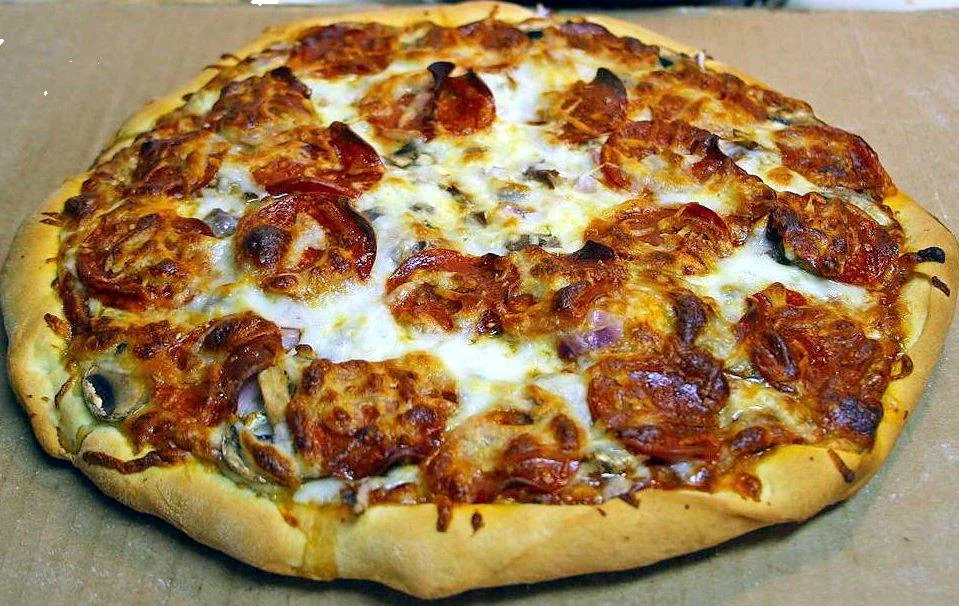
Cover photos, via Wikimedia Commons: "Salami pepperoni ZIMBO.jpg" by MOs810, CC BY-SA 4.0 (flipped left to right); "Pepperoni Pizza (29204589095).jpg" by Jonathan Cutrer, CC BY 2.0; "Pepperoni pizza.jpg" by Jon Sullivan (cropped by Neutrality, color correction by Veikk0.ma), public domain. The three photos were cut out from their backgrounds and combined with Halal Watch World artwork.
Sources
Company and retailer sources (read November 27, 2026)
- Hormel Foods. "HORMEL Original Pepperoni," product page. hormel.com/brands/hormel-pepperoni/product/pepperoni/. Read November 27, 2026.
- Hormel Foods. "HORMEL Turkey Pepperoni," product page. hormel.com/brands/hormel-pepperoni/product/turkey-pepperoni/. Read November 27, 2026.
- Hormel Foods. "HORMEL Pepperoni Cup and Crisp," product page. hormel.com/brands/hormel-pepperoni/product/cup-and-crisp-pepperoni/. Read November 27, 2026.
- Hormel Foods. "HORMEL Pepperoni Minis," product page. hormel.com/brands/hormel-pepperoni/product/pepperoni-minis/. Read November 27, 2026.
- Hormel Foods. "HORMEL Pepperoni Twin Links," product page. hormel.com/brands/hormel-pepperoni/product/pepperoni-twin-links/. Read November 27, 2026.
- Hormel Foods. "HORMEL Pepperoni Sticks," product page. hormel.com/brands/hormel-pepperoni/product/pepperoni-sticks/. Read November 27, 2026.
- Hormel Foods. "HORMEL Original Pepperoni Bites," product page. hormel.com/brands/hormel-pepperoni/product/original-pepperoni-bites/. Read November 27, 2026.
- Hormel Foods. "HORMEL Pepperoni Bites Dill Pickle Flavored," product page. hormel.com/brands/hormel-pepperoni/product/dill-pickle-pepperoni-bites/. Read November 27, 2026.
- Hormel Foods. "HORMEL Dill Pickle Flavored Pepperoni," product page. hormel.com/brands/hormel-pepperoni/product/dill-pickle-flavored-pepperoni/. Read November 27, 2026.
- Hormel Foods. "HORMEL Pepperoni with Jalapeno," product page. hormel.com/brands/hormel-pepperoni/product/pepperoni-with-jalapeno/. Read November 27, 2026.
- Hormel Foods. "HORMEL Uncured Pepperoni," product page. hormel.com/brands/hormel-pepperoni/product/uncured-pepperoni/. Read November 27, 2026.
- Hormel Foods. "HORMEL NATURAL CHOICE Uncured Pepperoni," product page. hormel.com/brands/hormel-natural-choice-meats/product/uncured-pepperoni/. Read November 27, 2026.
- Hormel Foods. "HORMEL NATURAL CHOICE Uncured Sandwich Pepperoni," product page. hormel.com/brands/hormel-natural-choice-meats/product/uncured-sandwich-pepperoni/. Read November 27, 2026.
- Hormel Foodservice. "HORMEL HALAL PEPPERONI 14/OZ 2/5#," product page. hormelfoodservice.com/products/hormel-halal-pepperoni-14-oz-2-5/. Read November 27, 2026.
- Hormel Foodservice. "HORMEL Pepperoni, Halal, 14 slices per oz, 2/12.5 lb," product page. hormelfoodservice.com/products/hormel-pepperoni-halal-14-slices-per-oz-2-12-5-lb/. Read November 27, 2026.
- Hormel Foodservice. "NATURAL CHOICE Uncured Pepperoni, All Natural, 16 slices per oz, 2/5 lb," product page. hormelfoodservice.com/products/hormel-natural-choice-uncured-pepperoni-16-sloz-10-lb/. Read November 27, 2026.
- Hormel Foodservice. "ROSA GRANDE Cup & Char Pepperoni, Sliced, 8 slices per oz, 2/12.5 lb," product page. hormelfoodservice.com/products/hormel-rosa-grande-sliced-pepperoni-8-slices-oz-2-12-5-lb/. Read November 27, 2026.
- Hormel Foods. "SLICED PEPPERONI ALL BEEF 10#," product page. smartlabel.hormelfoods.com/product-info/10037600523742. Read November 27, 2026.
- Dietz & Watson. "sliced pepperoni," product page. dietzandwatson.com/our-foods/meats/Sliced-Pepperoni-5. Read November 27, 2026.
- Gallo Salame. "Gallo Salame Deli Sliced Pepperoni, 3 oz.," product page. gallosalame.com/products/sliced-pepperoni/00044500003017. Read November 27, 2026.
- Volpi. "Gourmet Uncured Pepperoni 5 oz.," product page. volpifoods.com/products/sliced/gourmet-uncured-pepperoni-5oz/. Read November 27, 2026.
- Applegate. "Applegate Naturals Turkey Pepperoni," product page. applegate.com/products/applegate-naturals-turkey-pepperoni. Read November 27, 2026.
- Applegate. "Applegate Naturals Pork & Beef Pepperoni," product page. applegate.com/products/applegate-naturals-pork-beef-pepperoni. Read November 27, 2026.
- Margherita. "Turkey Pepperoni," product page. margheritameats.sfdbrands.com/en-us/products/pepperoni/turkey-pepperoni/. Read November 27, 2026.
- Margherita. "Italian Style 8 Oz. Pepperoni," product page. margheritameats.sfdbrands.com/en-us/products/pepperoni/italian-style-8-oz-pepperoni/. Read November 27, 2026.
- Margherita. "Pepperoni Stick 8 Oz.," product page. margheritameats.sfdbrands.com/en-us/products/pepperoni/pepperoni-stick-8-oz/. Read November 27, 2026.
- Margherita. "Uncured Pepperoni," product page. margheritameats.sfdbrands.com/en-us/products/all-natural/uncured-pepperoni/. Read November 27, 2026.
- ALDI (Mama Cozzi). "Mama Cozzi Original Pepperoni," ALDI product page. aldi.us/landing?product_id=20986524&retailer_id=12. Read November 27, 2026.
- Trader Joe's. "Uncured Mini Pepperoni," product page. traderjoes.com/home/products/pdp/mini-uncured-pepperoni-sticks-082197. Read November 27, 2026.
- Kroger. "Kroger Sliced Pepperoni," Kroger website listing. kroger.com/p/kroger-sliced-pepperoni/0001111097534. Read November 27, 2026.
- Private Selection. "Private Selection Pepperoni Deli Sliced," Kroger website listing. kroger.com/p/private-selection-pepperoni-deli-sliced/0001111099837. Read November 27, 2026.
- Simple Truth. "Simple Truth Smoked Uncured Pork Pepperoni," Kroger website listing. kroger.com/p/simple-truth-smoked-uncured-pork-pepperoni/0001111062548. Read November 27, 2026.
- Great Value. "Great Value Original Pepperoni," Instacart listing. instacart.com/products/20658169-great-value-original-pepperoni-6-oz. Read November 27, 2026.
- Boar's Head. "Boar's Head Uncured Turkey Pepperoni," Kroger website listing. kroger.com/p/boar-s-head-uncured-turkey-pepperoni/0004242116154. Read November 27, 2026.
- Boar's Head. "Boar's Head Uncured Pepperoni," Kroger website listing. kroger.com/p/boar-s-head-uncured-pepperoni/0004242100595. Read November 27, 2026.
- Cattleman's Cut. "Cattleman's Cut Beef Pepperoni," Instacart listing. instacart.com/store/products/27134655-cattleman-s-cut-all-beef-pepperoni-sticks-10-oz. Read November 27, 2026.
- Sweet Earth. "Sweet Earth Italian Style Pepperoni Plant-Based Deli Slices," Kroger website listing. kroger.com/p/sweet-earth-italian-style-pepperoni-plant-based-deli-slices/0001674148167. Read November 27, 2026.
- Oscar Mayer. "Oscar Mayer Pepperoni Slices," Instacart listing. instacart.com/store/products/1841396-oscar-mayer-pepperoni-slices-6-oz. Read November 27, 2026.
- Midamar. "Halal Sliced Beef Pepperoni - 5 lb," product page. midamarhalal.com/products/beef-pepperoni. Read November 27, 2026.
- Eckrich. "Eckrich Sliced Pepperoni," Instacart listing. instacart.com/store/products/16939442-eckrich-sliced-pepperoni-2-5-oz. Read November 27, 2026.
- Tofurky. "Pepp'roni," product page. tofurky.com/what-we-make/pepperoni/plant-based-pepperoni/. Read November 27, 2026.
- Field Roast. "Plant-Based Pepperoni," product page. fieldroast.com/product/pepperoni/. Read November 27, 2026.
- Nema Food Corp. "Nema Beef Pepperoni," product page. nemafood.com/product/nema-beef-pepperoni-10-oz. Read November 27, 2026.
- Boar's Head. "Uncured Pepperoni," product page. boarshead.com/products/detail/558-sandwich-style-pepperoni. Read November 27, 2026.
- Domino's. Ingredients page. dominos.com/content/ingredients. Read November 27, 2026.
- Pizza Hut. "What is in Pizza hut pepperoni?" page. pizzahut.com/c/content/pepperoni-pizza. Read November 27, 2026.
- Papa Johns. "What Kind of Pepperoni Does Papa Johns Use?" page. papajohns.com/ultimate-pepperoni-pizza/. Read November 27, 2026.
- Little Caesars. U.S. nutrition and ingredient guide (PDF). littlecaesars.com/static/usnutritionguide.pdf. Read November 27, 2026.
Other sources
- Hormel Foods. "NPR Podcast Pepped up with Pepperoni," newsroom item dated August 7, 2019. hormelfoods.com/newsroom/news/npr-podcast-pepped-up-with-pepperoni/. Read November 27, 2026.
- U.S. Department of Agriculture, Food Safety and Inspection Service. Food Standards and Labeling Policy Book, PDF page 124 of 188 (entries PEPPERONI, PEPPERONI, COOKED and PEPPERONI WITH POULTRY). usda.gov/sites/default/files/guidance-documents/Labeling-Policy-Book%20Revised%20Disclaimer%202.24.26.pdf. Downloaded November 27, 2026.
- U.S. Department of Agriculture, Food Safety and Inspection Service. askFSIS, public Q&A on collagen casings. ask.fsis.usda.gov/article/askFSIS-Public-Q-A-collcas. Read November 27, 2026.
- U.S. Code of Federal Regulations. 9 CFR 317.2(f)(1) (ingredient list) and 9 CFR 317.8(b)(37) and (b)(38) (casings), as reproduced by the Legal Information Institute, Cornell Law School. law.cornell.edu/cfr/text/9/317.2; law.cornell.edu/cfr/text/9/317.8. 21 CFR 101.22(a)(3) (natural flavor). ecfr.gov/current/title-21/chapter-I/subchapter-B/part-101/subpart-B/section-101.22.
- Merriam-Webster. "Pepperoni." merriam-webster.com/dictionary/pepperoni. Encyclopaedia Britannica. "Pepperoni." britannica.com/topic/pepperoni. Both read November 27, 2026.
Halal Watch World sources
- Halal Watch World. HIPS 1001:2026 §1.3.2, §1.3.3(d), §1.4.1.2, §2.6.2 and Appendix B; HIPS 1003:2026 §1.5.7 (Speciation Testing for Pork, Donkey, Carnivorous Animals); HIPS 1003-A:2026 §5.2 (Solvents and Alcohol-Based Materials), §8.6 (Livestock-Derived Products) and §8.14 (Poultry and Raw Meat); HIPS 1003-C:2026 (Halal Livestock Processor) §4.1.
- Halal Watch World. Certification Methodology & Analysis Report 2023, published January 2, 2023, PDF pages 19 to 21, 48 (section "Summary," Slaughtered Animals), 54 (vinegar) and 55 (intention).
Religious sources
- Qur'an 2:173, 5:3, 5:5, 6:121 and 6:145, Saheeh International translation. quran.com/2/173; quran.com/5/3; quran.com/5/5; quran.com/6/121; quran.com/6/145.
- Sahih al-Bukhari 52. sunnah.com/bukhari:52. Sahih Muslim 1929c. sunnah.com/muslim:1929c. Jami` at-Tirmidhi 1294. sunnah.com/tirmidhi:1294.
Related reading: Are Fast-Food Fries Halal? · Is Popeyes Chicken Halal? · Is Dave's Hot Chicken Halal? · Hidden Haram Ingredients in Food · Is Machine Slaughter Halal? · Halal Meat Certification · The Complete Halal Consumer Guide