On this page
- 01Are McDonald’s French Fries Halal? Halal Watch World Investigates
- 02Are your French fries vegan?
- 03What McDonald’s Says, and What McDonald’s Does Not Say
- 04The UK and the US: A Very Revealing Comparison
- 05Why Vegan Status Does Not Solve the Halal Question
- 06Independent Evidence: What Others Have Found
- 07Cross Contamination and Fryer Practices
- 08So, Are McDonald’s Fries Halal?
- 09My Conclusion
- 10Where to Go From Here
- 11Sources and References
- 12Is Your Product Ready for Halal Certification?
- 13Start With the Needs Assessment
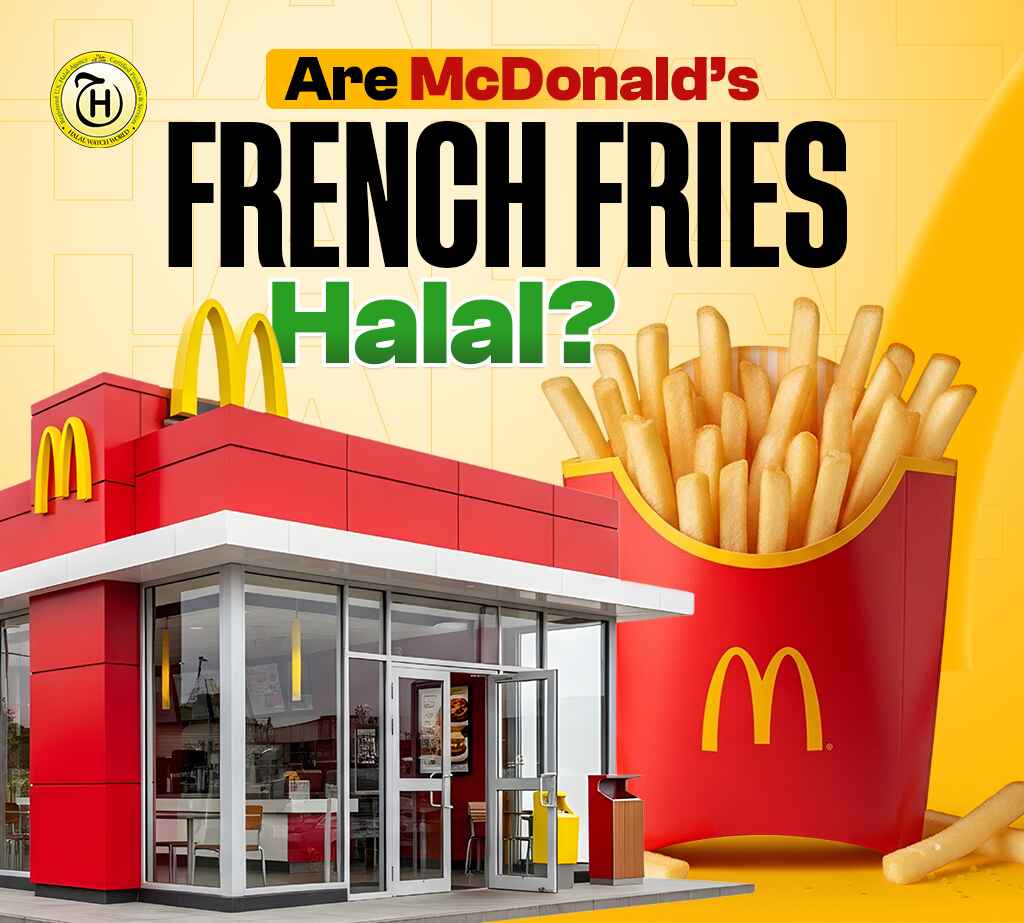
Are McDonald’s French Fries Halal? Halal Watch World Investigates
Summary: Halal verdict: McDonald’s French fries in the United States should be treated as not halal. The presence of beef flavoring without halal certification, in combination with a history of limited disclosure and unclear fryer practices, makes them unsuitable for Muslims who wish to avoid doubtful foods.
Yesterday, I pulled into McDonald’s for a couple of fish sandwiches, practically the only fried item there that consistently uses its own dedicated vat to avoid cross contamination. While ordering, I casually asked a question I have had in the back of my mind for years:
Are your French fries vegan?
The staff member blinked. “I am pretty sure they are vegan, they are potatoes,” she said.
“I know some companies use beef tallow or beef flavoring,” I replied. “So I am not sure.”
She hesitated. “I am not really sure either.”
And that was it. I skipped the fries, grabbed my sandwiches, and drove off wondering why no one seemed to know the answer to such a simple question. McDonald’s is one of the most standardized brands in the world. How could there be so much uncertainty about something as basic as French fries?
There was only one thing to do. Go home and start digging.
What McDonald’s Says, and What McDonald’s Does Not Say
The U.S. McDonald’s website describes its fries in friendly, familiar language. They are “World Famous Fries,” made from potatoes such as Russet Burbank, Ranger Russet, Umatilla Russet, and Shepody, fried in a vegetable oil blend and served hot and crispy.[1] On the surface, it all sounds straightforward and reassuring.
The real story only starts to appear when you read the fine print in the FAQ section. There, in response to a question about flavors, McDonald’s quietly states that when its suppliers partially fry the cut potatoes, they use an oil blend that contains beef flavoring.[2] The fries arrive at the restaurant already par fried in that flavored oil and are then finished in the store’s own oil.
McDonald’s does not explain what this “beef flavoring” is. They do not say whether it is derived from actual beef, whether it is synthesized, whether it is plant based, or whether it is certified in any way. They simply call it beef flavoring and move on. There is no mention of halal considerations, no discussion of vegetarians, and no clarity about religious sensitivities around beef derived ingredients.
This is not the language of a company that lacks information. It is the language of a company that has chosen to be vague. A brand that can tell you exactly which variety of potato is used could also tell you exactly how its beef flavoring is produced. The fact that it does not is important. For a halal conscious consumer, intentional vagueness around animal linked ingredients is a serious warning sign.
The UK and the US: A Very Revealing Comparison
The picture becomes even clearer when you compare what McDonald’s says in the United States with what it says in the United Kingdom. On the UK website, McDonald’s goes out of its way to reassure customers that its fries are cooked in non hydrogenated vegetable oil, that they contain no animal derived coatings, and that they are suitable for vegans. They highlight the fact that the fries are accredited by the Vegetarian Society and present this as an achievement.[3][4]
In other words, when those details help the brand, McDonald’s is perfectly comfortable being explicit. They advertise the vegan and vegetarian status of their fries in the UK because it strengthens consumer trust and gives them a marketing advantage.
In the United States, however, the tone is very different. There is no statement that the fries are vegan. There is no assurance that they are suitable for vegetarians. There is no declaration that there are no animal derived coatings or flavors. Instead, there is only the quiet admission that an oil blend with beef flavoring is used at the supplier stage, and then silence.
That silence is not accidental. If McDonald’s could honestly say that its U.S. fries were vegan, they would. If the beef flavoring were plant based, they could say so directly. If there were no animal derivatives to worry about, they could put it in bold on the product page. The fact that they do not do any of this, while happily doing it elsewhere in the world, tells us that the truth in the U.S. market would not work in their favor.
Companies do not hide good news. They hide inconvenient news. For a halal conscious consumer, that should be taken as a major red flag.
Why Vegan Status Does Not Solve the Halal Question
At this point, it is important to make something clear for Muslim readers. Whether or not the fries are vegan does not answer the halal question. As we explained in our article “The Halal Vegan Muslim,” vegan certification only tells you that no animal ingredients have been intentionally included. It does not tell you how the food was processed, whether it was exposed to non halal substances, how the equipment was cleaned, or whether there are other factors that matter from an Islamic perspective.
A food item can be vegan and still fail to meet halal standards. It might be produced on shared lines with non halal meat, processed with alcohol based carriers, or handled in ways that do not meet Islamic requirements for purity. Vegan, in other words, is not a shortcut to halal.
The reason vegan status appears in this investigation is not because it would automatically make the fries halal if it were confirmed. Instead, it is because of what it reveals about McDonald’s communication strategy. In the UK, the company loudly announces that its fries are suitable for vegans and vegetarians and even cites external accreditation. In the U.S., the same company avoids making any such claim, despite clearly knowing how to communicate that information when it wants to.
This contrast matters. It shows that McDonald’s is fully capable of issuing a direct, unambiguous statement about the nature of its fries but chooses not to do so in the United States. That choice is part of the broader pattern of vagueness around the beef flavoring and the religious implications that follow.
Independent Evidence: What Others Have Found
Independent investigations and ingredient analyses have confirmed what McDonald’s wording implies. Ingredient lists for U.S. fries show that the natural beef flavor contains both wheat and milk derivatives, meaning that it is not only animal linked but also unsuitable for customers who avoid dairy or gluten.[1][5][7][8] These disclosures have appeared in reporting, consumer advocacy discussions, and historical coverage of legal actions brought against the company.
Historically, McDonald’s fried its potatoes in actual beef tallow in the United States until 1990, when health concerns and public pressure led the company to switch to vegetable oil. To preserve the familiar taste, they retained beef derived flavoring in the formula. This decision later led to lawsuits from vegetarian and religious groups who had been led to believe the fries were completely meat free. In 2002, McDonald’s paid a multimillion dollar settlement and issued clarifications acknowledging the use of beef flavoring in its fries.[9][10]
All of this forms a pattern. Beef linked ingredients have been used, downplayed, and only clearly acknowledged when legal or public pressure forced the issue. The current description of “beef flavoring” without further explanation fits neatly within that pattern of minimal disclosure and carefully limited transparency.
Cross Contamination and Fryer Practices
Even if someone were to assume, against the weight of the evidence, that the beef flavoring used today was entirely plant derived, another concern remains. Fryer practices across U.S. McDonald’s locations are not uniform. Some restaurants may use dedicated vats for fries, while others may share fryers with non halal items. There is no clear, nationwide standard guaranteeing complete separation between fries and products that contain meat or other non halal ingredients.
For a halal conscious consumer, doubt about the ingredients is already enough to avoid a food. When that doubt is compounded by questions about equipment, oil reuse, and cross contact with non halal items, the overall picture becomes even more troubling. It is not simply one small grey area; it is a stack of uncertainties on top of a history of partial disclosure.
So, Are McDonald’s Fries Halal?
When you put all the pieces together, the answer becomes clear. McDonald’s confirms that beef flavoring is used at the supplier stage in the United States. It does not explain the origin or composition of that flavoring in a way that would satisfy halal concerns. It does not claim that the fries are halal, does not market them as vegan or vegetarian in the U.S., and does not mirror the level of transparency it displays in other countries where the formulation is different.
At the same time, independent sources show that the natural beef flavor contains milk derivatives, and historical reporting confirms that beef linked flavoring has long been part of the American fries recipe. Fryer practices are inconsistent and not designed with halal separation in mind. All of this is accompanied by deliberately careful language that avoids saying more than is legally necessary.
My Conclusion
McDonald’s has the resources and communications infrastructure to be precise when it chooses to be. That makes its vagueness about beef flavoring a decision, not an oversight. If the fries were free from animal derivatives, they would say so. If they were plant-based, the packaging would reflect it. If they were halal certified, that certification would be front and center. None of that exists. What exists instead is a carefully worded ingredient disclosure and silence where clarity is owed.
For halal-conscious Muslims in the United States, that silence is itself an answer.
This is not about one uninformed cashier or one regional policy. The ambiguity is structural. It is embedded in how the company chooses to communicate this product to consumers who have legitimate religious and dietary concerns. A corporation of this scale does not accidentally leave those questions unanswered.
Until McDonald’s changes the formulation or commits to genuine transparency, the only responsible conclusion is to treat U.S. McDonald’s fries as non-halal. There are plenty of alternatives. There is only one conscience. And when the facts are deliberately unclear, caution is not overcaution. It is the right call.
Where to Go From Here
If you find yourself at McDonald’s and still wish to minimize risk, the best approach is to focus on items you have researched in advance, ask for ingredient and allergen information at the specific location you visit, and be mindful of how fryers and grills are used. The larger lesson, however, goes beyond one restaurant chain. It is a reminder that halal observance in a modern food system often requires investigation, questions, and a willingness to walk away from products that companies are not willing to explain.
For more detailed investigations into popular brands and products, you can also read our articles on Popeyes Chicken and Reese’s Peanut Butter Cups, where we apply the same approach of careful reading, independent research, and clear halal conclusions.
Sources and References
- McDonald’s USA, “World Famous Fries (Small)” ingredients listing, accessed 2025. Ingredients include potatoes, vegetable oil, and “natural beef flavor (wheat and milk derivatives).”
- McDonald’s USA FAQ, “Do you add any type of flavor when preparing your fries?” Statement that suppliers partially fry potatoes in an oil blend that contains beef flavoring.
- McDonald’s UK FAQ pages describing fries as suitable for vegans, cooked in a blend of sunflower and rapeseed oil, and free from animal derived coatings.
- McDonald’s UK information indicating that its fries are accredited by the Vegetarian Society and labeled as suitable for vegans and vegetarians.
- Ingredient analyses and consumer advocacy reports explaining that McDonald’s U.S. fries contain natural beef flavor with milk and wheat derivatives.
- Historical coverage of complaints and public concern over the use of beef derived ingredients in McDonald’s fries and the lack of transparency around those ingredients.
- Vegetarian and allergy focused resources noting that McDonald’s U.S. fries are not suitable for vegans due to the presence of dairy linked components in the flavoring.
- News and analysis articles summarizing McDonald’s U.S. fry recipe and comparing it with simpler, vegan formulations used in other countries.
- Historical reporting on McDonald’s switch from beef tallow to vegetable oil in 1990 in the United States, while maintaining beef derived flavoring to preserve taste.
- Reports on the 2002 settlement in which McDonald’s agreed to pay $10 million to vegetarian and religious organizations over the misrepresentation of its fries as meat free.
Is Your Product Ready for Halal Certification?
Start With the Needs Assessment
Discover if your ingredients, processes, and facilities align with Islamic dietary laws.
Start your Needs Assessment now to begin scope review.
